FIELD NOTE
10th Ke Baad Kya Kare? Science, Commerce, Arts, Diploma Aur ITI Ka Complete Guide
Introduction 👋
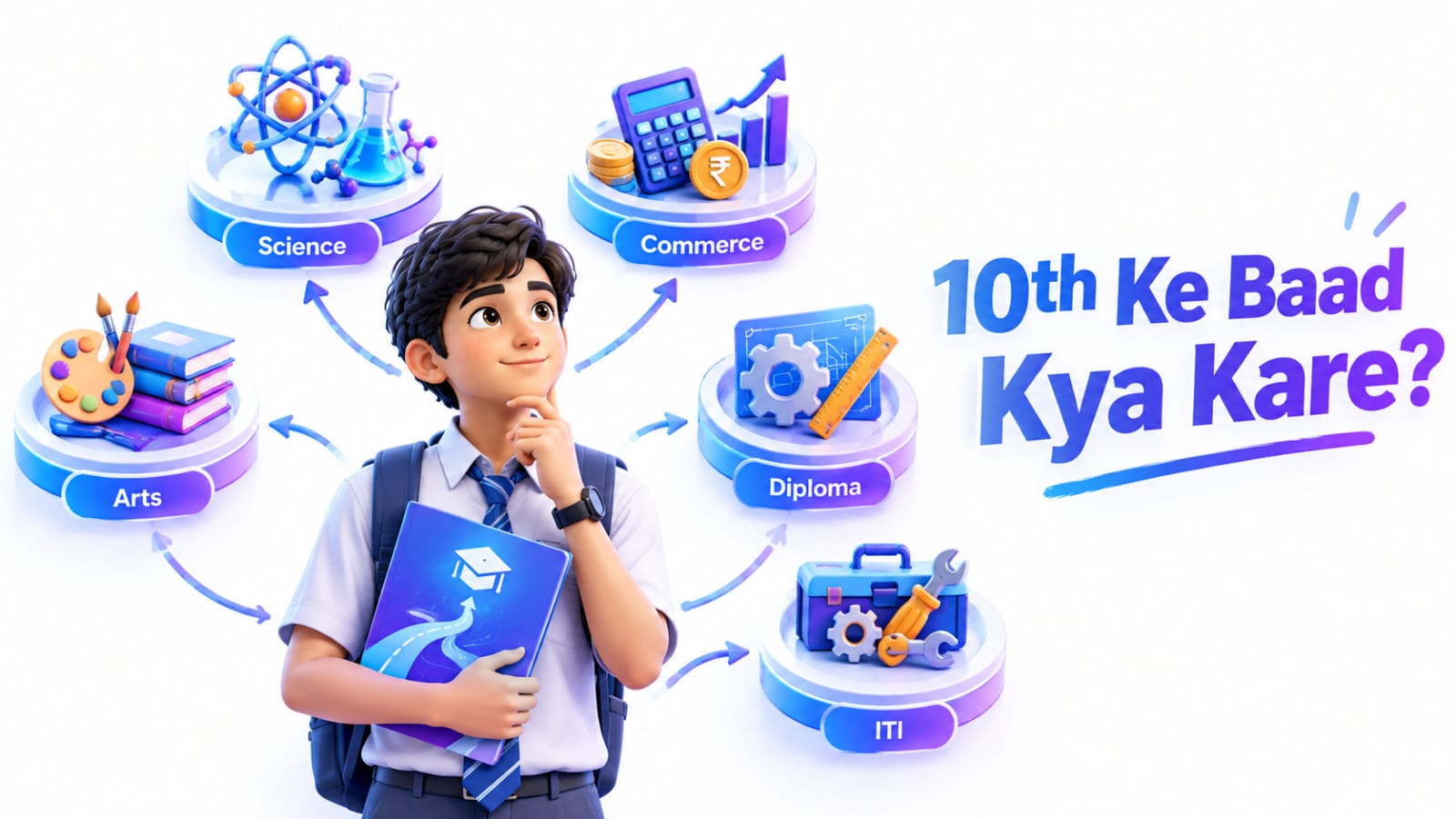
10th ke baad har student ke dimaag mein ek common sawaal hota hai – "10th ke baad kya karein?" Is stage par students ko Science, Commerce, Arts, Diploma, ITI aur kai skill-based courses mein se apne liye sahi option choose karna hota hai. Lekin interest, marks, career goal aur future scope ko samjhe bina liya gaya decision baad mein confusion ka sabab ban sakta hai.
Har student ke liye Science stream hi best nahi hoti. Kisi student ke liye Commerce, Arts, Diploma ya ITI behtar option ho sakta hai. Isliye stream ya course choose karne se pehle uske subjects, eligibility, duration, career options aur career opportunities ke baare mein sahi information hona zaroori hai.
Is article mein hum jaanenge ki 10th ke baad students ke paas kaun-kaun se options hote hain, Science, Commerce aur Arts mein kya difference hai, Diploma aur ITI courses kaise choose karein, aur apne interest aur career goal ke hisaab se sahi option kaise select karein.
Is Article Mein Hum Kya Seekhenge? 📚
Is article mein hum step-by-step samjhenge:
- 10th ke baad Science, Commerce, Arts, Diploma, ITI aur skill-based courses jaise kaun-kaun se options hote hain.
- Science stream mein PCM, PCB aur PCMB kya hote hain aur inke baad kaun-se career options ho sakte hain.
- Commerce aur Arts/Humanities ke subjects, career options aur kis student ke liye ye options suitable ho sakte hain.
- Diploma/Polytechnic aur ITI courses kya hote hain, inke benefits kya hain aur inke baad kya career opportunities ho sakti hain.
- Skill-based courses jaise coding, web development, graphic designing, video editing aur digital marketing kab useful ho sakte hain.
- Apne interest, strengths, marks aur career goal ke according sahi option kaise choose karein.
- Science vs Commerce vs Arts vs Diploma vs ITI mein kya difference hai.
- 10th ke baad government jobs aur different career pathways ko kaise explore karein.
- Stream ya course choose karte waqt kaun-si common mistakes avoid karni chahiye.
- Course, college ya institute select karne se pehle eligibility, recognition, fees, training aur career opportunities ko kaise check karein.
Is article ke end tak aapko 10th ke baad available major options aur apne interest, strengths aur career goal ke according suitable pathway choose karne ka clear idea mil jayega.
Chailye jaante hain ki 10th ke baad kaun-kaun se options hote hain.
10th Ke Baad Available Career Options 🎓
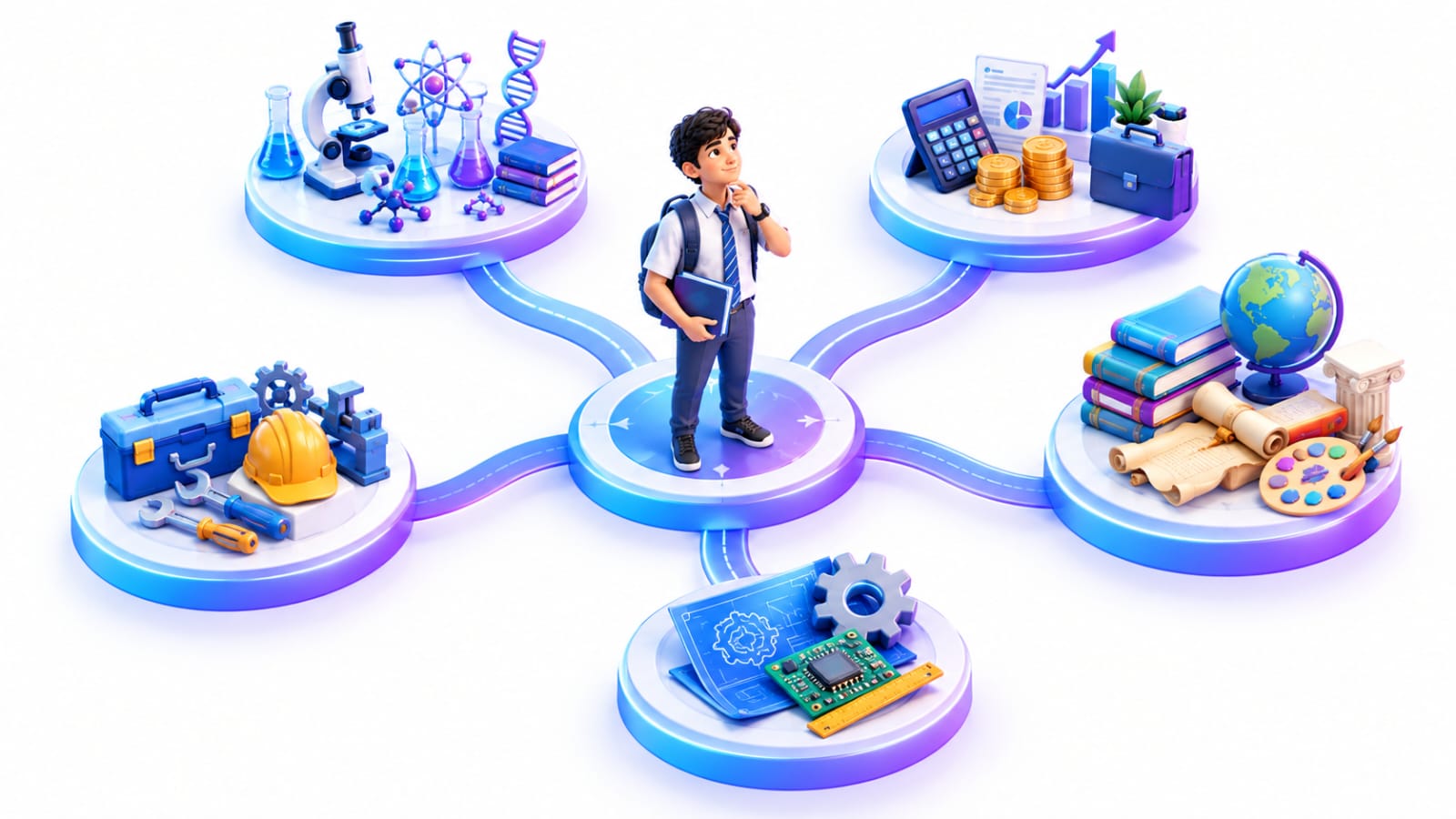
10th ke baad students ke paas apne interest, strengths, marks aur future career goals ke according kai education aur career pathways hote hain. Har student ke liye ek hi option best nahi hota. Isliye kisi stream ya course ko choose karne se pehle uske subjects, learning style, eligibility aur aage ke opportunities ko samajhna zaroori hai.
10th ke baad major options ko hum mainly in categories mein samajh sakte hain:
1. Science Stream 🔬
Science stream un students ke liye ek suitable academic pathway ho sakti hai jinka interest Mathematics, Physics, Chemistry ya Biology jaise subjects mein hai.
Science mein commonly PCM (Physics, Chemistry, Mathematics), PCB (Physics, Chemistry, Biology) aur kuch schools mein PCMB (Physics, Chemistry, Mathematics, Biology) jaise subject combinations mil sakte hain.
In pathways ke through students aage engineering, medicine, pure sciences, research, technology aur kai other fields ki taraf ja sakte hain. Lekin specific course ki eligibility aur entrance requirements alag ho sakti hain, isliye career goal ke according requirements check karna important hai.
2. Commerce Stream 💼
Commerce stream un students ke liye useful option ho sakti hai jinka interest business, accounts, economics, finance ya management jaise areas mein hai.
Commerce mein commonly Accountancy, Business Studies aur Economics jaise subjects hote hain. Mathematics lena hai ya nahi, ye school aur student ke chosen subject combination par depend kar sakta hai.
Aage chal kar students CA, CS, CMA, B.Com, Banking, Finance, Business Management aur other related fields explore kar sakte hain.
3. Arts/Humanities Stream 📚
Arts ya Humanities students ko history, society, politics, geography, languages, culture aur human behaviour jaise areas ko samajhne ka opportunity deti hai.
Is stream mein History, Political Science, Geography, Sociology, Psychology, Economics aur languages jaise subjects available ho sakte hain, depending on the school and subject combination.
Aage students Law, Teaching, Civil Services, Journalism, Psychology, Social Sciences, Design aur kai other fields explore kar sakte hain.
4. Diploma/Polytechnic Courses 🛠️
Diploma ya Polytechnic ek practical aur technical education pathway ho sakta hai, especially un students ke liye jo classroom learning ke saath technical skills aur practical training par focus karna chahte hain.
Popular options mein Civil Engineering, Mechanical Engineering, Electrical Engineering, Computer/IT aur Electronics jaise fields shamil ho sakte hain.
Course ki eligibility, duration aur admission process institute aur state ke according different ho sakti hai. Isliye admission lene se pehle official institute/board ki eligibility aur course details check karna zaroori hai.
Diploma ke baad students job opportunities, further technical education aur apne field ke according other higher-study pathways explore kar sakte hain.
5. ITI Courses 🔧
ITI (Industrial Training Institute) courses practical aur vocational skills par focus karte hain. Government ke Craftsmen Training Scheme (CTS) ke under ITIs mein different engineering aur non-engineering trades offer kiye jaate hain.
Popular trades mein Electrician, Fitter, Welder, Mechanic Motor Vehicle, Electronics Mechanic jaise options shamil hain. Trade ke according eligibility aur training duration alag ho sakti hai.
ITI ke baad students employment, apprenticeship, further skill development aur kuch cases mein self-employment jaise pathways explore kar sakte hain. DGT ke apprenticeship framework mein practical, workplace-based training ka bhi provision hai.
6. Skill-Based & Vocational Courses 💻
Aaj ke time mein students formal education ke saath skill-based learning par bhi focus kar sakte hain. Ye skills future study ya career goals ke according useful ho sakti hain.
Examples mein:
- Coding aur Web Development
- Graphic Designing
- Video Editing
- Digital Marketing
- UI/UX Design
- Computer Applications
- Communication aur other professional skills
Lekin ek important baat: short-term skill course ko automatically 11th–12th education ka replacement nahi samajhna chahiye. Student ko apne long-term career goal aur required qualification ke according academic education aur skill development ka balance decide karna chahiye.
10th Ke Baad Kaun-Kaun Se Options Hote Hai Quick Overview 📊
| Option | Useful For | Example Pathways |
|---|---|---|
| Science | Maths, Science, Biology, Technology | Engineering, Medicine, Research, Technology |
| Commerce | Accounts, Business, Finance, Economics | CA, CS, CMA, Banking, Finance, Business |
| Arts/Humanities | History, Society, Languages, Politics, Culture | Law, Teaching, Civil Services, Journalism, Psychology |
| Diploma/Polytechnic | Practical & Technical Skills | Civil, Mechanical, Electrical, Computer/IT |
| ITI | Hands-on Technical/Vocational Skills | Electrician, Fitter, Welder, Mechanic |
| Skill-Based Courses | Specific Job/Industry Skills | Coding, Web Development, Design, Video Editing, Digital Marketing |
Important: Kisi bhi stream ya course ko sirf marks ya social pressure ke basis par choose na karein. Apne interest, strengths, career goal, eligibility aur long-term pathway ko consider karke decision lena better hai.
10th Ke Baad Science 🔬

10th ke baad Science stream un students ke liye ek important academic pathway ho sakti hai jinka interest Science, Mathematics, Technology, Medicine ya Research jaise fields mein hai. Lekin Science choose karna sirf high marks ka decision nahi hona chahiye. Student ko apne interest, strengths, learning style aur future career goal ko bhi consider karna chahiye.
Senior-secondary level par subjects aur combinations school aur education board ke according vary kar sakte hain. CBSE ke official curriculum mein Physics, Chemistry, Biology, Mathematics, Computer Science aur other elective subjects available hain. Science stream choose karne se pehle apne school aur board ki available subject combinations ko check karna important hai. CBSE Official Curriculum
1. Science Stream Mein Kaun-Kaun Se Subjects Hote Hain?
Science stream mein commonly students Physics, Chemistry, Mathematics aur Biology jaise subjects choose karte hain. Kuch schools mein career goal ke according Computer Science, Informatics Practices, Physical Education aur other elective subjects bhi available ho sakte hain.
Physics ⚡
Physics mein students motion, force, energy, electricity, magnetism, waves aur matter jaise concepts ko samajhte hain.
Ye subject un students ke liye useful ho sakta hai jo natural phenomena ko logically samajhna aur mathematical concepts ke through problems solve karna pasand karte hain.
Chemistry 🧪
Chemistry mein matter, elements, compounds, chemical reactions aur substances ke properties jaise concepts study kiye jaate hain.
Medical, engineering, pure science aur kai other science-related higher education pathways mein Chemistry important role play kar sakti hai.
Mathematics 📐
Mathematics students ki logical thinking, analytical ability aur problem-solving skills develop karne mein help karta hai.
Engineering, Computer Science, Data Science, Mathematics aur kai technical fields mein Mathematics ka strong foundation useful ho sakta hai.
Biology 🧬
Biology mein living organisms, human body, genetics, ecology aur life processes jaise topics study kiye jaate hain.
Biology mein interest rakhne wale students medical, life sciences, biotechnology aur other biology-related fields explore kar sakte hain.
💡Important: Science stream mein exact subjects aur subject combinations school aur board ke according different ho sakte hain. Isliye admission se pehle apne school ki latest subject list zaroor check karein.
2. PCM, PCB Aur PCMB Kya Hote Hain?
Science choose karte waqt students ko commonly PCM, PCB aur PCMB jaise terms sunne ko milte hain. Ye Physics, Chemistry, Mathematics aur Biology ke different subject combinations ko refer karte hain.
| Combination | Full Form | Kis Career Ke Liye Useful Hai? |
|---|---|---|
| PCM | Physics, Chemistry, Mathematics | Engineering, Computer Science, Technology, Mathematics aur other technical fields |
| PCB | Physics, Chemistry, Biology | Medicine, Dentistry, Life Sciences aur healthcare-related fields |
| PCMB | Physics, Chemistry, Mathematics, Biology | Mathematics aur Biology dono se related multiple academic pathways |
PCM — Physics, Chemistry & Mathematics
PCM mein Physics, Chemistry aur Mathematics main subjects hote hain.
Ye combination generally un students ke liye relevant ho sakta hai jinka interest:
- Engineering
- Computer Science
- Technology
- Mathematics
- Architecture
- Physical Sciences
jaise fields mein hai.
Lekin kisi particular course ke liye eligibility aur entrance requirements alag ho sakti hain. Isliye career decide karne se pehle concerned course ki official eligibility check karna important hai.
PCB — Physics, Chemistry & Biology
PCB mein Physics, Chemistry aur Biology main subjects hote hain.
Ye combination un students ke liye relevant ho sakta hai jo:
- Medicine
- Dentistry
- Life Sciences
- Biotechnology
- Healthcare
jaise areas explore karna chahte hain.
Medical education ke context mein NEET (UG) National Testing Agency dwara conduct kiya jaane wala national entrance examination hai. NEET UG undergraduate medical education ke admission ke liye common entrance examination hai aur kuch other regulated medical programmes par bhi apply hota hai. NEET (UG) Official Website
⚠️ Important: Har medical ya healthcare course ke admission rules same nahi hote. Isliye kisi specific course ko target karne se pehle uski latest official eligibility aur admission process check karein.
PCMB — Physics, Chemistry, Mathematics & Biology
PCMB mein Physics, Chemistry, Mathematics aur Biology chaaron subjects hote hain.
Is combination ka advantage ye ho sakta hai ki student Mathematics aur Biology dono se related future pathways explore kar sake. Lekin PCMB mein subjects ka academic workload comparatively demanding ho sakta hai.
Isliye PCMB choose karne se pehle student ko apni interest, study capacity aur future career goal ko carefully consider karna chahiye.
3. Science Stream Ke Baad Career Options 🚀
Science stream ke baad students ke paas multiple career pathways ho sakte hain. Career options largely selected subjects, higher education, skills aur specific course eligibility par depend karte hain.
Agar aap 12th ke baad available courses aur career options ko detail mein samajhna chahte hain, to hamara 12th Ke Baad Kya Kare? article bhi padh sakte hain.
Engineering & Technology 💻
PCM students engineering aur technology-related fields explore kar sakte hain.
Popular areas mein:
- Computer Science Engineering
- Mechanical Engineering
- Civil Engineering
- Electrical Engineering
- Electronics & Communication
- Information Technology
shamil ho sakte hain.
Engineering admission ke liye entrance examination aur eligibility requirements course aur institution ke according different ho sakti hain. Isliye admission se pehle concerned institution ya official examination authority ki latest information check karni chahiye.
Medical & Healthcare 🩺
PCB students medical aur healthcare-related fields explore kar sakte hain.
Examples:
- Medicine
- Dentistry
- Veterinary Sciences
- Nursing
- Pharmacy
- Allied Health Sciences
Lekin in sabhi courses ki eligibility aur admission process same nahi hoti. Isliye specific course choose karne se pehle official requirements check karna zaroori hai.
Pure Science & Research 🔬
Agar student ko scientific concepts, experiments aur research mein interest hai, to higher education mein Physics, Chemistry, Mathematics, Biology aur other science-related subjects explore kiye ja sakte hain.
Aage students research, laboratory work, teaching, scientific institutions aur other science-related careers ki taraf ja sakte hain.
Computer & Technology 💻
Science students computer aur technology-related skills bhi develop kar sakte hain.
Examples:
- Programming
- Web Development
- Artificial Intelligence
- Data Science
- Cybersecurity
- Software Development
Yahan ek important point ye hai ki Science stream alone technology career ki guarantee nahi deti. Practical skills, projects, higher education aur continuous learning bhi important hote hain.
4. Science Stream Kin Students Ke Liye Suitable Ho Sakti Hai?
Science stream un students ke liye suitable ho sakti hai:
- Jinhe Science aur Mathematics mein genuine interest ho.
- Jo concepts ko logically samajhna aur problems solve karna pasand karte hain.
- Jinhe engineering, medicine, technology, research ya science-related fields mein interest hai.
- Jo regular study aur conceptual learning ke liye comfortable hain.
- Jo apne selected subjects ke saath long-term higher education ke liye prepared rehna chahte hain.
5. Science Stream Ke Benefits Aur Challenges ⚖️
Benefits ✅
-
Engineering, medicine, technology, research aur pure sciences jaise multiple career pathways explore karne ka opportunity milta hai.
-
Physics, Chemistry, Mathematics aur Biology jaise subjects se strong conceptual aur analytical foundation develop ho sakti hai.
-
Mathematics aur Science ki strong understanding future ke kai technical aur scientific courses mein useful ho sakti hai.
-
Science background ke saath students higher education mein apne interest ke according different specialisations choose kar sakte hain.
Challenges ⚠️
-
Science subjects mein concepts ko samajhne ke saath regular practice aur revision ki zaroorat hoti hai.
-
PCM, PCB ya PCMB jaise combinations mein academic workload student ke liye demanding ho sakta hai.
-
Engineering, medical aur other competitive pathways mein entrance exams aur additional preparation ki requirement ho sakti hai.
-
Sirf high marks ke basis par Science choose karna baad mein difficult ho sakta hai agar student ka genuine interest subjects mein na ho.
💡Quick Tip: Science ko sirf isliye choose na karein kyunki log ise sabse best stream kehte hain. Apne interest, strengths, study capacity aur career goal ko priority dein.
6. Science Stream Ka Simple Example
Maan lijiye kisi student ko Mathematics aur Physics pasand hain aur uska goal future mein engineering ya technology field mein jaana hai. Aise student ke liye PCM ek relevant pathway ho sakta hai.
Wahin agar kisi student ko Biology aur human body ke topics mein strong interest hai aur woh medical field explore karna chahta hai, to PCB pathway relevant ho sakta hai.
Isliye “kaun-si stream best hai?” se zyada important question hai:
Mere interest, strengths aur career goal ke liye kaun-sa pathway suitable hai?
10th Ke Baad Commerce 💼

10th ke baad Commerce un students ke liye ek important academic pathway ho sakta hai jinka interest business, accounting, economics, finance, management aur entrepreneurship jaise areas mein hai.
Commerce choose karne ka matlab sirf CA ya banking mein career banana nahi hai. Is stream ke through students accounting, finance, business, management, economics, law aur entrepreneurship jaise multiple fields explore kar sakte hain.
Senior-secondary level par subjects aur combinations school aur education board ke according vary kar sakte hain. Isliye Commerce choose karne se pehle apne school ki available subject combinations aur latest curriculum ko check karna important hai.
CBSE ke current curriculum mein Accountancy, Business Studies, Economics, Mathematics/Applied Mathematics aur Entrepreneurship jaise subjects available hain. Lekin exact combination school ke according different ho sakta hai.
CBSE Official Curriculum
1. Commerce Mein Kaun-Kaun Se Subjects Hote Hain?
Commerce stream mein commonly Accountancy, Business Studies aur Economics jaise subjects padhe jaate hain. Iske alawa school ke according Mathematics/Applied Mathematics, Entrepreneurship aur other elective subjects bhi available ho sakte hain.
Accountancy 📊
Accountancy mein students financial transactions, journal, ledger, trial balance, financial statements aur accounting concepts jaise topics study karte hain.
Ye subject un students ke liye useful ho sakta hai jinka interest accounts, finance aur numbers mein hai.
Aage chal kar Accountancy ka strong foundation CA, CMA, B.Com, finance aur accounting-related careers mein helpful ho sakta hai.
Business Studies 🏢
Business Studies mein students business organisation, management, marketing, finance, entrepreneurship aur business environment jaise concepts ke baare mein learn karte hain.
Ye subject students ko business kaise operate aur manage kiya jaata hai, iska basic understanding develop karne mein help karta hai.
Economics 📈
Economics mein students demand and supply, markets, production, consumption, national income aur economic activities jaise concepts study karte hain.
Economics un students ke liye interesting ho sakta hai jo business, markets, finance aur economy ko samajhna pasand karte hain.
Mathematics / Applied Mathematics 📐
Kuch schools mein Commerce students ke liye Mathematics ya Applied Mathematics bhi available hota hai.
Mathematics useful ho sakta hai agar student future mein finance, economics, data-related fields, business analytics ya other quantitative areas explore karna chahta hai.
💡 Important: Commerce stream mein exact subjects aur combinations school aur board ke according different ho sakte hain. Admission se pehle apne school ki latest subject list zaroor check karein.
2. Commerce Ke Common Subject Combinations 🫲
Commerce mein students ke liye different subject combinations available ho sakte hain. Exact combination school ke according vary karega.
| Combination | Main Subjects | Kis Career Ke Liye Useful Hai? |
|---|---|---|
| Commerce + Mathematics | Accountancy, Business Studies, Economics, Mathematics | Finance, Economics, Business, Management, Analytics |
| Commerce without Mathematics | Accountancy, Business Studies, Economics | Accounting, Business, Management, Finance, Entrepreneurship |
| Commerce + Applied Mathematics | Accountancy, Business Studies, Economics, Applied Mathematics | Business, Finance, Economics, Analytics |
| Commerce + Entrepreneurship | Accountancy, Business Studies, Economics, Entrepreneurship | Business, Startups, Management, Entrepreneurship |
💡 Quick Tip: Mathematics lena ya na lena apne future career goal ke according decide karein. Har Commerce career ke liye Mathematics compulsory nahi hoti, lekin kuch courses aur career pathways mein Mathematics ki requirement ho sakti hai.
3. 10th Ke Baad Commerce Se Career Options 🚀
Commerce ke baad students ke paas academic aur professional career ke multiple options ho sakte hain. Career choice student ke subjects, higher education, skills aur specific course eligibility par depend karti hai.
Agar aap 12th ke baad different courses aur career options ko detail mein samajhna chahte hain, to hamara 12th Ke Baad Kya Kare? guide bhi helpful rahega.
Chartered Accountant (CA) 🧾
Chartered Accountant (CA) accounting, auditing, taxation aur financial reporting se related ek professional career pathway hai.
CA banne ke liye students ko Institute of Chartered Accountants of India (ICAI) ke prescribed education aur examination process ko follow karna hota hai.
CA un students ke liye suitable option ho sakta hai jinka interest accounting, taxation, auditing aur finance mein hai.
Company Secretary (CS) ⚖️
Company Secretary (CS) corporate laws, compliance, governance aur company-related legal matters se connected professional pathway hai.
Is field ko pursue karne wale students Institute of Company Secretaries of India (ICSI) ke official programme aur examination process ko follow karte hain.
Cost and Management Accountant (CMA) 💰
Cost and Management Accountant (CMA) cost management, accounting, financial planning aur business decision-making se related professional field hai.
Is career pathway ke liye students Institute of Cost Accountants of India (ICMAI) ke prescribed course aur examination process ko follow kar sakte hain.
B.Com Aur Higher Education 🎓
Commerce students 12th ke baad B.Com (Bachelor of Commerce) jaise undergraduate programmes pursue kar sakte hain.
B.Com ke through students accounting, finance, taxation, economics, business aur management jaise areas mein further education le sakte hain.
Aage students MBA, M.Com, professional certifications aur other specialised programmes bhi explore kar sakte hain, depending on their career goals and eligibility.
Banking & Finance 🏦
Commerce background wale students banking, finance, accounting aur financial services jaise areas mein career explore kar sakte hain.
Is field mein higher education ke saath financial knowledge, communication skills, computer skills aur quantitative ability develop karna useful ho sakta hai.
Business & Entrepreneurship 🚀
Agar student ko business ideas develop karna, products/services create karna aur business manage karna pasand hai, to Commerce background ke saath entrepreneurship bhi ek career pathway ho sakta hai.
Students higher education ke saath business, marketing, finance aur management skills develop karke apna business start karne ki direction mein bhi ja sakte hain.
4. Commerce Kin Students Ke Liye Suitable Ho Sakta Hai?
Commerce un students ke liye suitable ho sakta hai:
- Jinhe business, accounting, economics ya finance mein interest ho.
- Jo numbers aur financial concepts ko samajhna pasand karte hain.
- Jinhe business aur management ke concepts interesting lagte hain.
- Jo future mein CA, CS, CMA, B.Com, banking, finance, management ya entrepreneurship explore karna chahte hain.
- Jo analytical thinking aur decision-making skills develop karna chahte hain.
💡 Quick Tip: Commerce ko sirf isliye choose na karein kyunki aapko Science difficult lagti hai. Agar aapka genuine interest business, accounting, economics ya finance mein hai, tab Commerce ek strong option ho sakta hai.
5. 10th Ke Baad Commerce Choose Karne Se Pehle Kya Sochna Chahiye?
Commerce choose karne se pehle in questions ke answers khud se poochein:
- Kya mujhe business aur finance mein genuine interest hai?
- Kya mujhe accounting aur numbers ke saath kaam karna comfortable lagta hai?
- Kya main Economics aur Business Studies jaise theoretical concepts samajhne mein interested hoon?
- Kya mujhe future mein CA, CS, CMA, B.Com, banking ya business jaise fields explore karne hain?
- Kya mere preferred career option ke liye Mathematics required hai?
Agar in questions ke answers clear hain, to Commerce choose karna easier ho sakta hai.
6. Commerce Stream Ke Benefits Aur Challenges ⚖️
Benefits ✅
-
Business, accounting, finance aur economics ki basic understanding develop hoti hai.
-
CA, CS, CMA, B.Com, banking, finance aur entrepreneurship jaise multiple pathways available hote hain.
-
Business aur financial decision-making ki foundation build ho sakti hai.
-
Entrepreneurship mein interest rakhne wale students ke liye useful academic background ho sakta hai.
Challenges ⚠️
-
Accountancy mein regular practice ki zaroorat hoti hai.
-
Economics aur Business Studies mein concepts ke saath theory bhi samajhni hoti hai.
-
Professional courses jaise CA, CS aur CMA ke liye consistent preparation aur long-term commitment required ho sakta hai.
-
Career options bahut hone ke kaaran starting mein students ko confusion ho sakta hai.
Commerce Ka Real-World Example 💡
Dhirubhai Ambani ka example entrepreneurship ke context mein dekha ja sakta hai. Unhone limited resources se business journey start karke Reliance ko ek large business group ke roop mein develop kiya.
Lekin unki success ko sirf Commerce education ka result maanna sahi nahi hoga. Ye example mainly ye samjhane ke liye useful hai ki business knowledge ke saath vision, risk-taking, execution aur long-term thinking bhi entrepreneurship mein important hote hain.
💡 Important: Kisi successful person ki story ko apne career decision ka sole reason na banayein. Apne interest, strengths, education requirements aur long-term goals ko priority dein.
10th Ke Baad Arts/Humanities 📚
10th ke baad Arts/Humanities un students ke liye ek important academic pathway ho sakta hai jinka interest History, Geography, Political Science, Economics, Psychology, Sociology, Languages, Literature, Fine Arts ya Social Sciences jaise subjects mein hai.
Arts ko lekar ek common misconception hai ki is stream mein career options limited hote hain. Lekin reality mein Arts/Humanities ke through students Civil Services, Law, Journalism, Teaching, Psychology, Design, Social Sciences, Management, Media aur Creative Fields jaise multiple career pathways explore kar sakte hain.
Arts choose karne ka decision bhi sirf marks ke basis par nahi hona chahiye. Student ko apne interest, strengths, favourite subjects aur future career goal ko consider karke decision lena chahiye.
CBSE ke senior-secondary curriculum mein History, Political Science, Geography, Psychology, Sociology, Economics, Fine Arts, Philosophy aur other subjects available hain. Lekin exact subject combinations school ke according vary kar sakte hain.
CBSE Official Curriculum
1. Arts/Humanities Mein Kaun-Kaun Se Subjects Hote Hain?
Arts/Humanities mein students ke paas school ke according different subjects aur combinations available ho sakte hain.
Common subjects mein:
- History
- Political Science
- Geography
- Economics
- Sociology
- Psychology
- English/Hindi aur other languages
- Fine Arts
- Physical Education
- Philosophy
jaise subjects shamil ho sakte hain.
💡 Important: Har school mein same subjects ya same combination available nahi hota. Isliye admission se pehle apne school ki latest subject list aur combination zaroor check karein.
History 📜
History mein students past societies, civilizations, political developments, cultures, movements aur important historical events ke baare mein study karte hain.
Ye subject un students ke liye interesting ho sakta hai jo past events ko samajhna aur unke social aur political impact ko analyse karna pasand karte hain.
History ka knowledge future mein Civil Services, Law, Teaching, Research, Journalism aur Humanities-related higher education mein useful ho sakta hai.
Political Science 🏛️
Political Science mein students government, political institutions, democracy, constitution, rights, political systems aur international relations jaise topics study karte hain.
Agar student ko government, politics, public policy aur current affairs mein interest hai, to Political Science ek useful subject ho sakta hai.
Geography 🌍
Geography mein students physical environment, climate, resources, population, maps, human settlements aur geographical processes jaise topics study karte hain.
Ye subject un students ke liye suitable ho sakta hai jinka interest environment, maps, places, society aur natural processes mein hai.
Economics 📈
Economics mein students markets, demand and supply, production, consumption, income, development aur economic activities jaise concepts study karte hain.
Economics Arts/Humanities ke saath bhi choose ki ja sakti hai aur ye students ko economy aur financial systems ko understand karne mein help kar sakti hai.
Psychology 🧠
Psychology mein students human behaviour, emotions, personality, learning, memory aur mental processes jaise topics ke baare mein study karte hain.
Agar student ko human behaviour aur people ke thoughts aur actions ko samajhne mein interest hai, to Psychology ek interesting option ho sakta hai.
Sociology 👥
Sociology mein students society, social groups, institutions, culture, relationships aur social change jaise topics ko study karte hain.
Ye subject un students ke liye useful ho sakta hai jo society aur human relationships ko samajhne mein interest rakhte hain.
2. Arts/Humanities Ke Common Subject Combinations
Arts/Humanities mein subject combinations school ke according different ho sakte hain. Kuch common combinations ko example ke roop mein samjha ja sakta hai:
| Combination | Main Subjects | Kis Career Ke Liye Useful Hai? |
|---|---|---|
| Humanities + Political Science | Political Science, History, Geography/Economics | Civil Services, Law, Public Policy, Political Studies |
| Humanities + Psychology | Psychology, Sociology, English/History | Psychology, Social Sciences, Teaching, HR |
| Humanities + Economics | Economics, Political Science, History/Geography | Economics, Management, Public Policy, Research |
| Humanities + Geography | Geography, History, Political Science | Geography, Civil Services, Environment, Planning |
| Humanities + Fine Arts | Fine Arts, History, English/other subjects | Design, Fine Arts, Creative Fields, Media |
💡 Quick Tip: Subject combination choose karte waqt sirf kaunsa combination popular hai? mat dekhein. Apne future career goal aur interest ke according subjects select karein.
3. 10th Ke Baad Arts Se Career Options 🚀
Arts/Humanities ke baad students ke paas multiple academic aur professional career pathways ho sakte hain.
Career choice student ke selected subjects, higher education, skills aur specific course eligibility par depend karegi.
Civil Services & Government Careers 🏛️
Arts/Humanities students Civil Services aur other government career pathways ko explore kar sakte hain.
History, Geography, Political Science aur Economics jaise subjects Civil Services ki preparation mein useful academic foundation provide kar sakte hain. Lekin Civil Services ke liye sirf Arts stream lena compulsory nahi hai.
UPSC Civil Services Examination ke liye required educational qualification graduation/equivalent degree hoti hai. Isliye 10th ke baad Arts choose karna ek long-term academic pathway ho sakta hai, direct government job qualification nahi.
💡 Important: Government jobs ki eligibility post aur examination ke according different hoti hai. Kisi specific exam ke liye preparation start karne se pehle official notification aur eligibility criteria check karein.
Law ⚖️
Arts/Humanities students higher education ke baad Law ko bhi career option ke roop mein explore kar sakte hain.
Political Science, History aur Sociology jaise subjects society, government aur legal systems ko samajhne mein helpful background de sakte hain.
Law ke field mein career banane ke liye recognised law programme aur applicable admission requirements ko follow karna zaroori hota hai.
Psychology & Counselling 🧠
Psychology mein genuine interest rakhne wale students graduation aur further specialised education ke through Psychology, counselling, research aur related fields explore kar sakte hain.
Lekin psychologist ya other regulated/professional roles ke liye specific educational qualifications aur applicable professional requirements ho sakti hain.
Isliye career decide karte waqt sirf course ka naam nahi, balki future role ki eligibility bhi check karein.
Journalism & Mass Communication 📰
Agar student ko writing, news, communication, storytelling, media aur current affairs mein interest hai, to Journalism aur Mass Communication jaise fields explore kiye ja sakte hain.
Aage students:
- Journalism
- Digital Media
- Content Writing
- News Media
- Public Relations
- Communication
jaise areas mein career opportunities explore kar sakte hain.
Teaching & Education 👨🏫
Arts/Humanities students graduation ke baad education aur teaching-related pathways bhi explore kar sakte hain.
History, Geography, Political Science, English aur other subjects mein higher education ke baad students teaching field ki direction mein ja sakte hain.
Teaching career ke liye required qualification aur eligibility level aur recruitment rules ke according different ho sakti hai.
Design & Creative Fields 🎨
Agar student ko drawing, visual creativity, design aur creative work mein interest hai, to Fine Arts, Design, Animation, Fashion, Illustration aur other creative fields explore kiye ja sakte hain.
Arts background creative fields ke liye ek natural academic pathway ho sakta hai, lekin design courses ki eligibility institution ke according different ho sakti hai.
💡 Example: Design ke kuch undergraduate programmes mein 10+2 kisi bhi recognised stream se acceptable ho sakta hai. Isliye Science ya Commerce students bhi kuch design pathways explore kar sakte hain. Specific course ki latest eligibility admission se pehle check karna zaroori hai.
Social Sciences & Research 🔬
Agar student ko society, human behaviour, politics, history ya economics ko deeply study karna pasand hai, to higher education mein Social Sciences aur Research explore kiya ja sakta hai.
Students aage jakar:
- Sociology
- Political Science
- Psychology
- History
- Economics
- Geography
- Social Research
jaise areas mein specialisation kar sakte hain.
4. Arts/Humanities Kin Students Ke Liye Suitable Ho Sakta Hai?
Arts/Humanities un students ke liye suitable ho sakta hai:
- Jinhe History, Geography, Political Science, Psychology, Sociology ya Languages mein genuine interest ho.
- Jinhe reading, writing aur analytical thinking pasand ho.
- Jo society, people, culture, politics aur current affairs ko samajhna pasand karte hain.
- Jo future mein Civil Services, Law, Journalism, Teaching, Psychology, Research, Design ya Creative Fields explore karna chahte hain.
- Jo theoretical concepts ko samajhne aur different perspectives analyse karne mein comfortable hain.
💡 Quick Tip: Arts ko sirf isliye choose na karein kyunki aap Science ya Commerce nahi lena chahte. Agar aapka genuine interest Humanities subjects mein hai, to Arts ek strong career pathway ho sakta hai.
5. Arts/Humanities Choose Karne Se Pehle Kya Sochna Chahiye?
Arts choose karne se pehle khud se ye questions poochein:
- Kya mujhe History, Geography, Political Science, Psychology ya Sociology jaise subjects interesting lagte hain?
- Kya mujhe reading aur writing pasand hai?
- Kya mujhe society, people, politics aur current affairs ko samajhna interesting lagta hai?
- Kya main future mein Law, Civil Services, Journalism, Teaching, Psychology, Research ya Creative Fields explore karna chahta/chahti hoon?
- Kya mere preferred career ke liye koi specific subject ya qualification required hai?
Agar in questions ke answers clear hain, to Arts/Humanities choose karna easier ho sakta hai.
6. Arts/Humanities Ke Benefits Aur Challenges ⚖️
Benefits ✅
-
Multiple fields jaise Law, Civil Services, Journalism, Psychology, Teaching, Research, Design aur Media explore karne ka opportunity milta hai.
-
History, Political Science, Geography, Psychology aur Sociology jaise subjects se analytical aur critical-thinking skills develop ho sakti hain.
-
Reading, writing, communication aur argument-building skills improve ho sakti hain.
-
Society, politics, culture aur human behaviour ko samajhne mein help mil sakti hai.
-
Students higher education mein apne interest ke according different specialisations choose kar sakte hain.
Challenges ⚠️
-
Kuch students ko theory-heavy subjects mein regular reading aur revision challenging lag sakta hai.
-
Sirf stream choose karna career guarantee nahi karta; higher education, skills aur practical experience bhi important hote hain.
-
Civil Services, Law, Psychology aur other professional pathways ke liye further education aur specific eligibility requirements ho sakti hain.
-
Arts ke career options broad hone ki wajah se students ko starting mein career direction choose karne mein confusion ho sakta hai.
💡Quick Tip: Arts/Humanities mein success ke liye sirf marks nahi, balki communication, research, analytical thinking, writing aur subject knowledge jaise skills ko bhi develop karna useful hai.
Arts/Humanities Ka Real-World Example 💡
Dr. A.P.J. Abdul Kalam ka example students ko ye samajhne mein help kar sakta hai ki career journey hamesha ek single academic stream tak limited nahi hoti. Unka academic background Science aur Engineering se connected tha aur unhone later India ke space aur defence programmes mein important contributions diye.
Is example ka purpose ye dikhana hai ki career success sirf school stream ke naam se decide nahi hoti. Interest, skills, education, hard work aur long-term learning bhi important role play karte hain.
💡 Important: Kisi successful personality ki story ko apne stream choose karne ka sole reason na banayein. Apne interest, strengths, career goal aur course eligibility ko priority dein.
Arts/Humanities Ke Baad Career Choose Karne Ka Simple Formula
Interest + Strengths + Career Goal + Required Qualification = Better Career Decision
Agar aapko History, Political Science aur current affairs pasand hain, to Civil Services, Law, Public Policy ya related fields explore kiye ja sakte hain.
Agar aapko human behaviour mein interest hai, to Psychology aur related higher education pathways explore kar sakte hain.
Agar aapko writing aur communication pasand hai, to Journalism, Digital Media, Content Writing aur Communication jaise fields consider kiye ja sakte hain.
Agar aapko creative work aur design pasand hai, to Fine Arts, Design, Animation aur other creative fields explore kiye ja sakte hain.
Isliye Arts ke context mein bhi sabse important sawaal ye nahi hai ki:
Arts ke baad sabse best career kya hai?
Balki sawaal hona chahiye:
Mere interest, strengths aur career goal ke liye Arts/Humanities ke andar kaun-sa pathway suitable hai?
10th Ke Baad Diploma/Polytechnic 🛠️
10th ke baad Diploma/Polytechnic un students ke liye ek practical technical education pathway ho sakta hai jo engineering, technology, computer, electrical, mechanical, civil ya other technical fields mein interest rakhte hain.
Diploma courses mein students ko classroom theory ke saath practical knowledge, technical skills aur industry-oriented concepts par bhi focus karne ka opportunity milta hai.
Agar student ka goal technical field mein relatively early stage par specialised education start karna hai, to 10th ke baad Diploma/Polytechnic ek acha option ho sakta hai.
1. Diploma/Polytechnic Kya Hota Hai?
Diploma/Polytechnic ek technical education programme hota hai jisme students kisi specific engineering ya technical branch ki theoretical aur practical knowledge develop karte hain.
Engineering aur technology ke diploma programmes mein Computer Science, Civil Engineering, Mechanical Engineering, Electrical Engineering, Electronics, Automobile jaise different branches available ho sakti hain.
Course duration aur eligibility institute, state aur programme ke according vary kar sakti hai. AICTE ke technical programme norms mein diploma programmes ke entry-level qualifications aur duration prescribed hain, jabki state technical boards apne affiliated programmes aur admission rules ke according details specify kar sakte hain.
AICTE Official Website
2. 10th Ke Baad Diploma Ki Eligibility Kya Hoti Hai?
Engineering aur technology ke kai Diploma/Polytechnic programmes mein 10th pass students admission ke liye eligible ho sakte hain.
Lekin exact eligibility mein:
- Minimum marks
- Required subjects
- Age criteria
- Entrance examination
- State-level admission rules
- Institute-specific requirements
jaise conditions ho sakti hain.
Isliye admission lene se pehle concerned state technical education board ya admission authority ki latest eligibility check karna zaroori hai.
💡 Important: AICTE norms ek broad regulatory framework provide karte hain, lekin actual admission requirements state/affiliating authority aur specific programme ke according different ho sakti hain. Isliye sirf kisi general eligibility ko dekhkar admission decision na lein.
3. Diploma/Polytechnic Course Kitne Saal Ka Hota Hai?
Diploma ki duration course aur programme ke according different ho sakti hai.
Bihar mein State Board of Technical Education (SBTE) ke affiliated Diploma Engineering programmes six semesters mein conduct hote hain. Iska matlab regular diploma engineering programme generally 3 years ka hota hai.
💡Note: Har Diploma/Polytechnic programme ki duration same nahi hoti. Admission se pehle specific course ki official duration check karein.
10th Ke Baad Kaun-Kaun Se Diploma Courses Hote Hain?
Diploma mein students apne interest aur career goal ke according different technical branches choose kar sakte hain.
Bihar SBTE ke current curriculum mein admission session 2026 ke liye Agricultural Engineering, Automobile Engineering, Chemical Engineering, Civil Engineering, Computer Science & Engineering, Electrical Engineering, Electronics Engineering, Mechanical Engineering, Printing Technology, Textile Engineering aur other branches listed hain.
1. Computer Science & Engineering 💻
Computer Science mein students:
- Programming
- Computer systems
- Software development
- Databases
- Networking
- Web technologies
jaise areas ki foundation develop kar sakte hain.
Agar student ko coding, computers aur technology mein interest hai, to Computer Science diploma ek relevant option ho sakta hai.
2. Civil Engineering 🏗️
Civil Engineering mein students:
- Construction
- Building materials
- Surveying
- Structural concepts
- Roads
- Infrastructure
jaise areas ke baare mein learn karte hain.
Ye branch un students ke liye useful ho sakti hai jinka interest construction, infrastructure aur physical structures mein hai.
3. Mechanical Engineering ⚙️
Mechanical Engineering mein students machines, manufacturing, mechanics, production aur mechanical systems jaise areas study karte hain.
Agar student ko machines aur mechanical systems mein interest hai, to ye branch consider ki ja sakti hai.
4. Electrical Engineering ⚡
Electrical Engineering mein students electric circuits, electrical systems, machines, power systems aur electrical equipment jaise concepts study karte hain.
Ye field un students ke liye relevant ho sakti hai jo electricity aur electrical technology mein interest rakhte hain.
5. Electronics Engineering 🔌
Electronics Engineering mein students electronic circuits, devices, communication systems aur electronics technology jaise areas explore karte hain.
Ye branch technology aur electronics mein interest rakhne wale students ke liye useful ho sakti hai.
6. Automobile Engineering 🚗
Automobile Engineering mein students vehicles, engines, automobile systems, maintenance aur related technologies ke baare mein study karte hain.
Agar student ko automobiles aur mechanical systems mein interest hai, to ye ek option ho sakta hai.
4. Diploma Branch Kaise Choose Karein?
Diploma mein branch choose karte waqt sirf naam ya popularity ko follow nahi karna chahiye.
| Branch | Kiske Liye Suitable Ho Sakti Hai? | Example Career Direction |
|---|---|---|
| Computer Science | Coding, computers, software | Software, IT, Web Development |
| Civil Engineering | Construction, infrastructure | Construction, Site Work, Infrastructure |
| Mechanical Engineering | Machines, manufacturing | Manufacturing, Maintenance, Production |
| Electrical Engineering | Electricity, electrical systems | Electrical, Power, Maintenance |
| Electronics Engineering | Electronics, circuits, technology | Electronics, Communication, Technical Roles |
| Automobile Engineering | Vehicles, engines | Automobile, Maintenance, Service |
💡 Quick Tip: Agar aapko coding aur computers pasand hain, to sirf isliye Mechanical ya Civil choose na karein kyunki woh popular hai. Interest + aptitude + future career goal ko priority dein.
5. Diploma Ke Baad Career Options 🚀
Diploma complete karne ke baad students ke paas different career aur higher-education pathways ho sakte hain.
Technical Jobs 💼
Diploma holders apni branch aur eligibility ke according technical roles ke liye apply kar sakte hain.
Examples:
- Junior Technician
- Technical Assistant
- Site Supervisor
- Maintenance Technician
- CAD/Design-related roles
- Production-related roles
- IT/Technical Support roles
Actual job title, salary aur eligibility employer aur recruitment rules ke according vary karte hain.
Government Jobs 🏛️
Diploma holders kuch government technical posts ke liye bhi eligible ho sakte hain, lekin eligibility *post-specific hoti hai.
For example, technical recruitment mein qualification, branch, experience aur other conditions department ke notification ke according different ho sakti hain.
⚠️ Important: Kisi government job ko Diploma ke baad automatically available na samjhein. Application se pehle concerned department ki latest official recruitment notification aur eligibility check karein.
Higher Education 🎓
Diploma ke baad students higher education continue karne ka option bhi explore kar sakte hain.
Engineering diploma ke baad eligible students kuch institutions aur state systems mein B.E./B.Tech lateral entry pathways explore kar sakte hain. Exact eligibility aur admission process state/university ke rules ke according different ho sakta hai.
Bihar SBTE bhi Diploma holders ke liye B.Tech admission aur lateral-entry eligibility se related official information provide karta hai.
Bihar SBTE Official Website
6. Diploma Vs 11th-12th — Kya Choose Karein?
10th ke baad Diploma aur regular 11th-12th dono alag pathways hain.
| Factor | Diploma/Polytechnic | 11th-12th |
|---|---|---|
| Focus | Technical & practical education | Academic/general education |
| Specialisation | Specific technical branch | Stream-based subjects |
| Learning Style | Theory + practical work | Mostly academic + practical depending on subjects |
| Typical Goal | Technical career / further technical education | Graduation, professional courses, competitive exams |
| Example | Computer, Civil, Mechanical, Electrical | Science, Commerce, Arts |
💡 Important: Diploma ko 12th se better ya 12th se worse nahi kaha ja sakta. Dono ka purpose alag hai. Choice student ke career goal aur preferred learning style par depend karti hai.
7. Diploma/Polytechnic Kin Students Ke Liye Suitable Ho Sakta Hai?
Diploma/Polytechnic un students ke liye suitable ho sakta hai:
- Jinhe technical subjects aur practical work mein interest ho.
- Jo machines, computers, electronics, construction ya technology ko practically samajhna chahte hain.
- Jo kisi specific technical field mein early specialisation start karna chahte hain.
- Jo theory ke saath hands-on learning ko prefer karte hain.
- Jo future mein technical job ya further technical education explore karna chahte hain.
8. Diploma/Polytechnic Ke Benefits Aur Challenges ⚖️
Benefits ✅
-
Technical field mein early specialisation ka opportunity mil sakta hai.
-
Theory ke saath practical aur technical skills develop ki ja sakti hain.
-
Specific engineering/technology branch par focused learning hoti hai.
-
Diploma ke baad job aur higher education dono pathways explore kiye ja sakte hain.
-
Practical skills future employment ke liye useful ho sakti hain.
Challenges ⚠️
-
Student ko relatively early stage par ek specific technical branch choose karni padti hai.
-
Branch change karna later stage par comparatively difficult ho sakta hai.
-
Sirf diploma certificate enough nahi hota; practical skills, communication, computer knowledge aur industry exposure bhi important hote hain.
-
Higher education ke liye lateral-entry ya other pathways ki eligibility institution/state ke according different ho sakti hai.
-
Institute choose karte waqt recognition, affiliation, infrastructure, labs, faculty aur placement record carefully check karna zaroori hai.
9. Diploma College/Polytechnic Choose Karne Se Pehle Kya Check Karein? 🔍
Admission lene se pehle in points ko zaroor check karein:
- Institute ki recognition aur affiliation
- Course ki actual duration aur eligibility
- Available branches aur curriculum
- Practical labs aur technical infrastructure
- Faculty aur teaching quality
- Internship aur industry exposure
- Placement record aur placement data ki credibility
- Total fees aur other charges
- Hostel/transport ki requirement
- Diploma ke baad higher-education pathways
10. Diploma Ka Real-World Example 💡
Maan lijiye ek student ko computers aur coding mein strong interest hai, lekin woh 10th ke baad hi technical education start karna chahta hai. Aise student ke liye Computer Science/Computer-related Diploma ek relevant pathway ho sakta hai.
Diploma ke dauraan student programming, databases aur practical projects par focus kar sakta hai. Course complete karne ke baad woh technical job opportunities explore kar sakta hai ya eligibility ke according higher education continue kar sakta hai.
Note: Ye ek hypothetical example hai, kisi specific student ki real-life story nahi. Actual career outcome student ke skills, institute, performance, higher education aur job market par depend karega.
11. Diploma Choose Karne Ka Simple Formula
Interest + Technical Aptitude + Preferred Branch + Career Goal = Better Diploma Choice
Agar aapko coding aur computers pasand hain → Computer-related Diploma explore karein.
Agar aapko machines aur manufacturing interesting lagta hai → Mechanical explore karein.
Agar aapko construction aur infrastructure pasand hai → Civil explore karein.
Agar aapko electricity aur electrical systems mein interest hai → Electrical explore karein.
Agar aapko vehicles aur automobile technology pasand hai → Automobile explore karein.
Lekin final decision lene se pehle course eligibility, institute recognition, curriculum aur future career opportunities zaroor check karein.
💡 Final Tip: 10th ke baad Diploma/Polytechnic un students ke liye ek useful option ho sakta hai jo technical education aur practical skills par focus karna chahte hain. Lekin branch aur institute ka selection carefully karein, kyunki ye decision aapke future career direction ko influence kar sakta hai.
10th Ke Baad ITI 🔧

10th ke baad ITI (Industrial Training Institute) un students ke liye ek practical skill-based education pathway ho sakta hai jo kisi specific trade mein hands-on training lekar technical skills develop karna chahte hain.
ITI mein students classroom theory ke saath practical training, workshop skills aur employability skills par bhi focus karte hain. ITI ke Craftsmen Training Scheme (CTS) ke under different engineering aur non-engineering trades available hain, aur trade ke according eligibility aur duration alag ho sakti hai.
Directorate General of Training (DGT) – Official Website
1. ITI Kya Hota Hai?
ITI ka full form Industrial Training Institute hai. ITI ka main purpose students ko different trades mein practical aur job-oriented skills provide karna hai.
ITI courses Directorate General of Training (DGT) ke Craftsmen Training Scheme (CTS) ke framework ke under conduct hote hain, jabki ITIs ka day-to-day administration aur admissions respective State Governments/UTs handle karte hain.
ITI mein students apni interest aur career goal ke according different trades choose kar sakte hain, jaise:
- Electrician
- Fitter
- Welder
- Mechanic Motor Vehicle
- COPA
- Electronics Mechanic
- Plumber
- Draughtsman
- Refrigeration & Air Conditioning Technician
- Other engineering aur non-engineering trades
💡 Important: Har ITI mein same trades available nahi hote. Admission se pehle concerned ITI aur official admission authority ki latest trade list check karein.
2. 10th Ke Baad ITI Ki Eligibility Kya Hoti Hai?
ITI ki eligibility trade-wise different hoti hai.
Kuch trades mein 8th pass qualification sufficient ho sakti hai, jabki kai technical trades ke liye 10th pass, Science aur Mathematics jaise subjects ki requirement ho sakti hai. DGT ke official CTS database mein har trade ke liye minimum qualification aur duration separately specified hoti hai.
Isliye ITI choose karte waqt sirf "10th ke baad ITI" dekhna enough nahi hai. Aapko specific trade ki eligibility check karni chahiye.
⚠️ Important: ITI admission ke rules state aur trade ke according vary kar sakte hain. Agar aap Bihar mein admission lena chahte hain, to Bihar Combined Entrance Competitive Examination Board (BCECEB) ki latest ITICAT information check karein.
Bihar ITICAT Official Website
3. ITI Course Kitne Saal Ka Hota Hai?
ITI courses ki duration trade ke according different hoti hai.
DGT ke current CTS framework mein kai trades 1 year ya 2 years duration ke hain, lekin kuch specialised trades ki duration alag bhi ho sakti hai. Isliye course select karne se pehle specific trade ki official duration check karna important hai.
For example, DGT ke current trade information mein Information Technology trade ki duration 2 years listed hai, jabki kai other trades 1 year ke bhi hain.
4. 10th Ke Baad Kaun-Kaun Se ITI Trades Hote Hain?
ITI mein students ke liye bahut saare engineering aur non-engineering trades available hain.
Kuch popular examples:
| ITI Trade | Main Focus | Suitable Interest |
|---|---|---|
| Electrician | Electrical systems, wiring, equipment | Electricity & electrical work |
| Fitter | Machines, fitting & mechanical work | Machines & mechanical systems |
| Welder | Welding & fabrication | Metal work & fabrication |
| Mechanic Motor Vehicle | Vehicle systems & maintenance | Cars, bikes & automobiles |
| Electronics Mechanic | Electronic systems & components | Electronics & technology |
| COPA | Computer operation & programming basics | Computers & IT |
| Plumber | Plumbing systems & installation | Practical construction work |
| Draughtsman | Technical drawing & design | Drawing, design & technical work |
| Refrigeration & AC Technician | Cooling & refrigeration systems | AC, refrigeration & maintenance |
💡 Quick Tip: Trade choose karte waqt sirf popularity ya kisi friend ke choice ko follow na karein. Apne interest, practical ability aur future career goal ko priority dein.
Electrician Trade ⚡
Electrician trade mein students electrical wiring, circuits, electrical equipment aur safety procedures jaise practical areas learn karte hain.
Agar student ko electricity, electrical systems aur hands-on technical work mein interest hai, to Electrician ek relevant option ho sakta hai.
Fitter Trade ⚙️
Fitter trade mein students machines aur mechanical components ko assemble, fit aur maintain karne se related practical skills develop karte hain.
Ye trade un students ke liye useful ho sakta hai jinka interest machines, tools aur mechanical work mein hai.
Welder Trade 🔥
Welder trade mein students different materials ko welding techniques ke through join karna aur related safety practices learn karte hain.
Agar student ko fabrication aur hands-on workshop work pasand hai, to Welding ek option ho sakta hai.
Mechanic Motor Vehicle 🚗
Mechanic Motor Vehicle trade mein students vehicles ke engine, mechanical systems, maintenance aur repair se related skills develop karte hain.
Automobiles mein interest rakhne wale students ke liye ye trade relevant ho sakta hai.
Computer Operator and Programming Assistant (COPA) 💻
COPA ek computer-related ITI trade hai jisme students computer operation, software applications aur basic programming-related skills develop kar sakte hain.
Agar student ko computer aur basic IT skills mein interest hai, to COPA explore kiya ja sakta hai.
💡 Note: Computer-related career ke liye ITI ke saath practical projects, advanced computer skills aur continuous learning develop karna bhi useful hota hai.
5. ITI Admission Kaise Hota Hai?
ITI admission ka process state aur admission authority ke according different ho sakta hai.
Bihar mein government ITIs ke different courses mein admission ke liye Industrial Training Institute Competitive Admission Test (ITICAT) BCECEB dwara conduct kiya jata hai. 2026 ke official Bihar ITICAT notice mein government ITIs ke various courses mein admission ke liye ITICAT-2026 ka process diya gaya hai.
Isliye Bihar ke students ko admission ke time:
- Official ITICAT notification check karna chahiye.
- Apni trade eligibility verify karni chahiye.
- Available ITIs aur trades check karne chahiye.
- Counselling aur choice-filling instructions carefully follow karni chahiye.
⚠️ Important: Admission dates, counselling rounds aur eligibility har session mein change ho sakti hai. Isliye latest information ke liye official BCECEB notification ko hi final source maanें.
6. ITI Ke Baad Career Options 🚀
ITI complete karne ke baad students ke paas employment, apprenticeship, self-employment aur further skill development jaise multiple pathways ho sakte hain.
Private Sector Jobs 💼
ITI trade ke according students technical roles ke liye apply kar sakte hain.
Examples:
- Technician
- Electrician
- Fitter
- Welder
- Machine Operator
- Automobile Technician
- Maintenance Technician
- Computer/IT Support-related roles
- Refrigeration & AC Technician
Actual job role aur eligibility employer aur trade ke according vary karegi.
Government Jobs 🏛️
ITI-qualified candidates kuch government technical posts ke liye bhi eligible ho sakte hain.
Different government departments aur organisations apni recruitment notification mein trade, qualification, age limit, experience aur other eligibility requirements specify karte hain.
⚠️ Important: Har government job ke liye ITI qualification sufficient nahi hoti. Apply karne se pehle concerned organisation ki latest official recruitment notification check karein.
Apprenticeship 🛠️
ITI students ke liye apprenticeship practical industry experience gain karne ka useful pathway ho sakta hai.
Apprenticeship ke through students workplace environment mein practical skills aur industry experience develop kar sakte hain.
💡 Quick Tip: ITI ke baad sirf certificate par depend karne ke bajay relevant apprenticeship ya practical work experience ke opportunities explore karna useful ho sakta hai.
Self-Employment / Own Work 🚀
Kuch trades mein ITI skills ke through students future mein &self-employment* bhi explore kar sakte hain.
For example, experience aur required resources ke saath Electrician, Plumber, Welder, Automobile Technician ya AC/Refrigeration Technician apni service-based work activity start kar sakte hain.
Lekin self-employment ke liye technical skill ke saath customer handling, pricing, basic accounting, communication aur business management jaise skills bhi important hote hain.
7. ITI Ke Baad Higher Education Aur Skill Development 🎓
ITI ke baad learning khatam nahi hoti.
Students apne trade aur eligibility ke according:
- Advanced skill training
- Apprenticeship
- Related technical courses
- Additional certifications
- Further vocational education
jaise options explore kar sakte hain.
DGT ke skill ecosystem mein Craft Instructor Training Scheme (CITS) jaise further training pathways bhi available hain, lekin unki eligibility alag hoti hai.
8. ITI Vs Diploma — Kya Difference Hai?
10th ke baad students aksar ITI aur Diploma ke beech confused hote hain.
| Factor | ITI | Diploma/Polytechnic |
|---|---|---|
| Main Focus | Trade-based practical skill training | Technical/engineering education |
| Learning | Practical + theory | Theory + practical |
| Specialisation | Specific trade | Engineering/technical branch |
| Duration | Trade ke according vary | Programme ke according vary |
| Examples | Electrician, Fitter, Welder, COPA | Civil, Mechanical, Electrical, Computer Science |
| Career Direction | Skilled technician/trade roles | Technical roles + further technical education |
💡 Important: ITI aur Diploma mein se koi ek universally "best" nahi hai. Agar aapko specific practical trade skill develop karni hai to ITI relevant ho sakta hai. Agar aap engineering/technical branch mein broader education chahte hain to Diploma/Polytechnic consider kar sakte hain.
9. ITI Kin Students Ke Liye Suitable Ho Sakta Hai?
ITI un students ke liye suitable ho sakta hai:
- Jinhe hands-on practical work pasand ho.
- Jo kisi specific technical trade mein skill develop karna chahte hain.
- Jinhe machines, electricity, vehicles, electronics ya practical technical work mein interest ho.
- Jo relatively short-duration vocational training ke through employable skills develop karna chahte hain.
- Jo future mein job, apprenticeship ya self-employment explore karna chahte hain.
10. ITI Ke Benefits Aur Challenges ⚖️
Benefits ✅
-
Practical aur job-oriented skills develop karne ka opportunity milta hai.
-
Specific trade mein focused training milti hai.
-
Course duration kai trades mein relatively short hoti hai.
-
ITI ke baad employment, apprenticeship aur self-employment jaise pathways explore kiye ja sakte hain.
-
Skilled trades ki practical demand wale sectors mein career opportunities explore ki ja sakti hain.
Challenges ⚠️
-
Student ko relatively early stage par ek specific trade choose karna padta hai.
-
Har trade ke career options aur growth opportunities same nahi hote.
-
Sirf ITI certificate ke bajay practical experience aur additional skills career growth ke liye important ho sakte hain.
-
Government jobs ke liye post-specific eligibility hoti hai.
-
Institute aur trade ki quality carefully check karna zaroori hai.
11. ITI Choose Karne Se Pehle Kya Check Karein? 🔍
Admission lene se pehle ye points check karein:
- Institute ki recognition/affiliation
- Selected trade ki eligibility
- Trade ki actual duration
- Practical workshop aur equipment
- Faculty aur training quality
- Previous placement/employment information
- Apprenticeship opportunities
- Total fees aur other charges
- Hostel/transport facilities, if required
- Course ke baad available career pathways
⚠️ Important: Sirf "100% placement" ya "high salary" jaise claims dekhkar ITI select na karein. Institute ki recognition, trade details aur available information ko official sources se verify karein.
12. ITI Ka Real-World Example 💡
Maan lijiye ek student ko electrical work aur practical technical activities mein strong interest hai. Woh 10th ke baad Electrician trade choose karta hai aur training ke dauraan electrical installation, maintenance aur safety-related practical skills develop karta hai.
Training ke baad woh apprenticeship ya suitable technical job opportunities explore kar sakta hai. Experience aur business skills develop karne ke baad future mein self-employment ka option bhi consider kar sakta hai.
Note: Ye ek hypothetical example hai, kisi specific student ki real-life story nahi. Actual career outcome trade, training quality, skills, experience aur job market par depend karega.
13. ITI Choose Karne Ka Simple Formula
Interest + Practical Ability + Right Trade + Quality Institute + Career Goal = Better ITI Decision
Agar aapko electricity aur wiring pasand hai → Electrician explore karein.
Agar aapko machines aur mechanical work pasand hai → Fitter explore karein.
Agar aapko vehicles pasand hain → Mechanic Motor Vehicle explore karein.
Agar aapko computers mein interest hai → COPA aur other computer-related trades explore karein.
Agar aapko fabrication aur metal work pasand hai → Welder jaise trades explore karein.
Lekin final decision lene se pehle trade eligibility, course duration, institute quality aur future career opportunities zaroor check karein.
💡 Final Tip: 10th ke baad ITI un students ke liye ek useful option ho sakta hai jo practical skills aur specific trade training par focus karna chahte hain. Sahi trade aur quality institute choose karna ITI ke baad career opportunities ko better understand karne mein important role play karta hai.
10th Ke Baad Skill-Based & Vocational Courses 💻

10th ke baad students ke paas traditional Science, Commerce aur Arts ke alawa skill-based aur vocational courses ka option bhi hota hai. In courses ka focus practical skills develop karne par hota hai, jisse students kisi specific field mein early stage se skills build kar sakte hain.
1. Skill-Based & Vocational Courses Kya Hote Hain?
Skill-based courses ka main focus kisi particular practical skill ko develop karna hota hai, jabki vocational courses generally kisi specific occupation ya industry ke liye practical training provide karte hain.
School-level vocational education mein IT, Retail, Tourism, Agriculture, Banking & Insurance, Healthcare, Multimedia, AI, Data Science aur Electronics jaise areas available ho sakte hain. CBSE ke current Skill Education curriculum mein bhi kai aise subjects listed hain.
CBSE Skill Education Curriculum
2. 10th Ke Baad Kaun-Se Skill-Based Courses Kar Sakte Hain?
Students apni interest ke according different skills explore kar sakte hain:
| Skill/Field | Examples |
|---|---|
| 💻 Computer & IT | Basic IT, Programming, Computer Applications |
| 🌐 Web Development | HTML, CSS, JavaScript, Web Development |
| 🎨 Designing | Graphic Design, UI Design |
| 🎬 Video Editing | Video Editing, Motion Graphics |
| 🤖 AI & Data | AI Basics, Data Science Fundamentals |
| 📱 Digital Marketing | SEO, Social Media, Content Marketing |
| 🏥 Healthcare | Healthcare-related vocational training |
| 🏦 Banking | Banking & Insurance |
| 🌾 Agriculture | Agriculture & related skills |
| 🛍️ Retail | Retail & Sales |
| 🧳 Tourism | Tourism & Hospitality |
| 🔧 Technical Skills | Electronics, Electrical, Automotive |
Agar aap bhi jaana chahte hain ki students ke liye kaun-si skills useful hain aur successful career ke liye kya seekhna chahiye, to aap Best Skills for Students: Career Mein Successful Hone Ke Liye Kya Sikhein padh sakte hain.
Important: Coding, web development, video editing ya digital marketing jaise skills online/private courses ke through bhi seekhe ja sakte hain. Inhe automatically formal diploma ya government-recognized vocational qualification nahi samajhna chahiye. Course ki recognition aur certification zaroor check karein.
3. Skill-Based Courses Kin Students Ke Liye Useful Hain?
Ye option un students ke liye useful ho sakta hai jo:
- Practical skills seekhna chahte hain.
- Kisi specific field ko early stage par explore karna chahte hain.
- Technology, designing, editing ya digital work mein interest rakhte hain.
- Future mein freelancing, employment ya entrepreneurship ke liye skills develop karna chahte hain.
4. Skill-Based Course Choose Karne Se Pehle Kya Check Karein?
Course join karne se pehle ye points check karein:
- Course ki recognition aur certification
- Syllabus aur practical training
- Course duration aur fees
- Institute/training provider ki credibility
- Course ke baad available career pathways
- Kya ye skill aapke long-term career goal ke saath match karti hai?
5. Skill-Based Courses Ke Benefits Aur Challenges
Benefits ✅
-
Practical skills develop hoti hain.
-
Career field ko early explore karne ka opportunity milta hai.
-
Academic education ke saath additional skills build ki ja sakti hain.
-
Freelancing aur entrepreneurship ke liye useful ho sakta hai.
Challenges⚠️
-
Har short-term course recognized qualification nahi hota.
-
Sirf certificate lene se job guarantee nahi hoti.
-
Skill ke saath continuous practice aur portfolio bhi important hota hai.
Simple Rule:
Interest + Practical Skill + Recognized Training + Practice = Better Career Preparation
Isliye 10th ke baad skill-based course choose karte waqt sirf course ka naam ya certificate dekhne ke bajay skill, training quality aur future career pathway ko bhi consider karein.
Interest, Marks & Career Goal Ke According Kya Choose Karein? 🎯
Calss 10th students Interest, Marks & Career Goal Ke According Kya Choose Karein?
10th ke baad sahi stream ya course choose karte waqt sirf marks ko dekhna enough nahi hai. Aapko apne *interest, strengths, career goal aur learning style8 ko bhi consider karna chahiye.
1. Interest Ke According Kya Choose Karein?
Agar aapko kisi particular subject ya field mein naturally interest hai, to us field se related option ko explore karna better ho sakta hai.
| Aapko Kis Field Mein Interest Hai? | Aap In Options Ko Explore Kar Sakte Hain |
|---|---|
| 🔬 Maths & Science | Science, Diploma/Polytechnic |
| 💼 Business & Finance | Commerce |
| 📚 History, Society & Languages | Arts/Humanities |
| 🔧 Practical & Technical Work | ITI, Diploma |
| 💻 Technology & Computers | Science, Diploma, IT/Skill Courses |
| 🎨 Creative Work | Arts, Design, Multimedia/Skill Courses |
| 🎬 Video & Digital Content | Skill-Based Courses |
| 🤖 AI & Technology | Science, Computer/IT & Skill Courses |
2. Marks Ke According Kya Choose Karein?
Marks important hain, lekin sirf high marks ke basis par Science choose karna zaroori nahi hai. Stream ya course choose karte waqt ye bhi dekhein ki aap uske subjects ko genuinely padhna aur regularly practice karna chahte hain ya nahi.
- Science: Maths/Science mein strong interest aur regular study ke liye ready students explore kar sakte hain.
- Commerce: Business, Accountancy, Economics aur Finance mein interest rakhne wale students ke liye suitable ho sakta hai.
- Arts/Humanities: History, Political Science, Geography, Psychology, Languages aur Social Sciences mein interest wale students explore kar sakte hain.
- Diploma/Polytechnic: Technical aur practical learning pasand karne wale students ke liye useful option ho sakta hai.
- ITI: Hands-on training aur specific technical trade seekhne mein interest rakhne wale students ke liye useful ho sakta hai.
Important: Kisi stream ko sirf isliye choose na karein kyunki log use "best" ya "high-scope" stream bolte hain. Aapke interest aur long-term goal ke saath match karna zyada important hai.
3. Career Goal Ke According Kya Choose Karein?
Agar aapka career goal already clear hai, to us goal tak pahunchne wale educational pathways ko pehle samajhna chahiye.
| Career Goal | Possible Pathways |
|---|---|
| 👨⚕️ Medical Field | Science → PCB/Relevant Subjects → Required Entrance/Professional Pathway |
| 👨💻 Technology/Engineering | Science → PCM/Relevant Subjects → Engineering/Technical Pathway |
| 📊 Finance & Accounting | Commerce → B.Com/Professional Courses |
| ⚖️ Law | Arts/Commerce/Science → Law Pathway |
| 🏛️ Civil Services | Any suitable stream → Graduation → UPSC/State PSC pathway |
| 🔧 Technical Job | Diploma/Polytechnic or ITI → Skill/Job/Apprenticeship Pathway |
| 🎨 Creative Career | Arts/Design/Skill-Based Learning → Portfolio & Further Education |
| 💻 Digital Career | Relevant Education + Skill Development + Projects/Portfolio |
Note: Career pathways course, college, entrance requirements aur professional regulations ke according different ho sakte hain. Kisi specific career ko choose karne se pehle uski current eligibility aur admission requirements check karein.
4. Apne Liye Sahi Option Kaise Choose Karein?
Decision lene ke liye ye 4 questions khud se poochein:
- Mujhe kis subject ya field mein genuinely interest hai?
- Meri strengths kis area mein hain?
- Main future mein kis type ka career banana chahta/chahti hoon?
- Kya main is option ke subjects aur learning style ke saath comfortable hoon?
Agar in questions ke answers clear hain, to 10th ke baad suitable stream ya course choose karna comparatively easier ho jata hai.
Simple Formula:
Interest + Strengths + Career Goal + Right Information = Better Career Decision
Agar aap students ke liye useful skills ko detail mein explore karna chahte hain, to Best Skills for Students: Career Mein Successful Hone Ke Liye Kya Sikhein bhi padh sakte hain.
Science vs Commerce vs Arts vs Diploma vs ITI — Kaunsa Better Hai? ⚖️
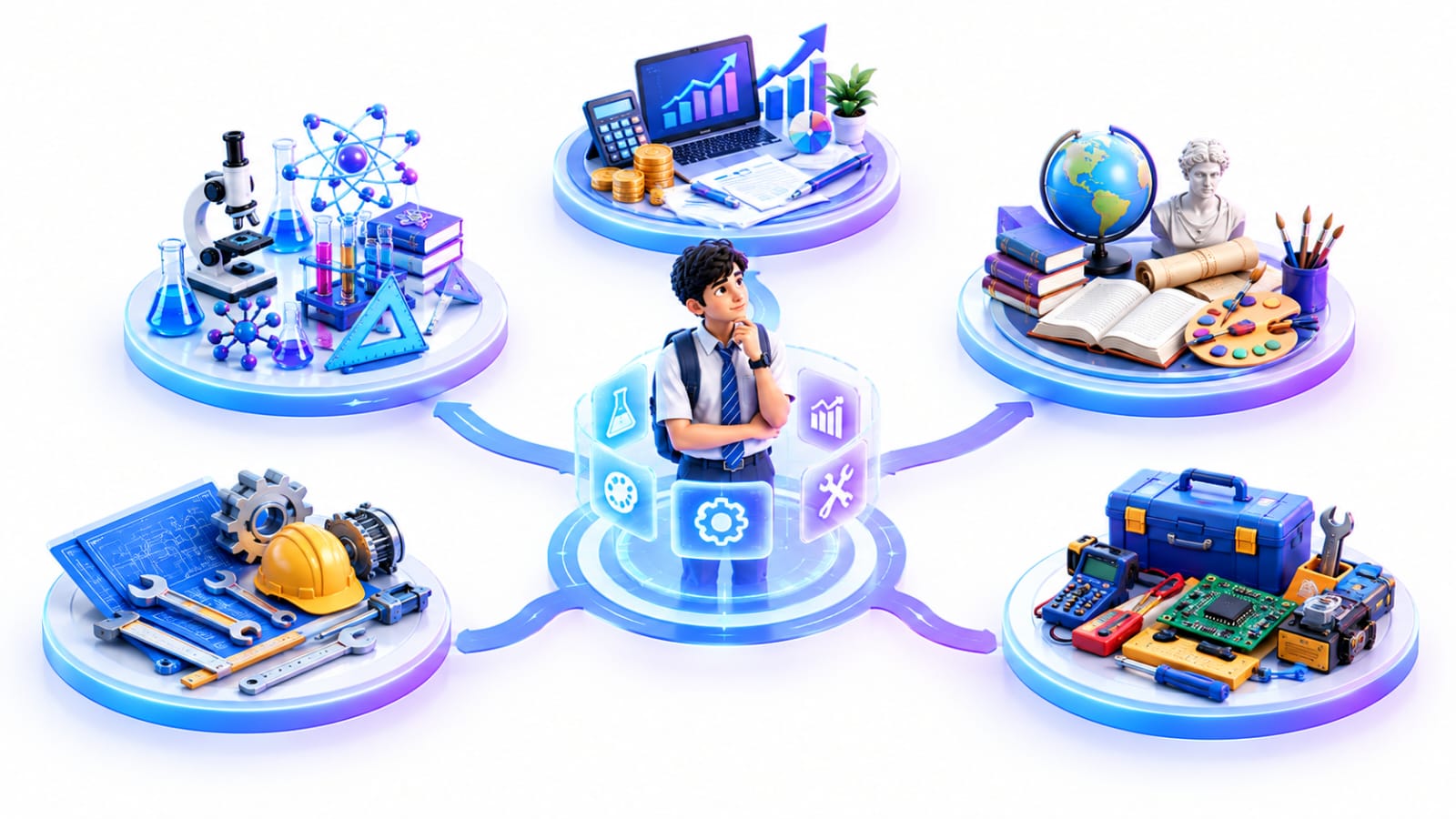
10th ke baad **Science, Commerce, Arts, Diploma aur ITI mein se koi ek option sabhi students ke liye best nahi hota. Sahi option student ke interest, strengths, career goal aur preferred learning style par depend karta hai.
Quick Comparison
| Option | Main Focus | Learning Style | Suitable For |
|---|---|---|---|
| 🔬 Science | Science, Maths & analytical subjects | Academic + Conceptual | Science, technology, medical ya engineering fields mein interest wale students |
| 💼 Commerce | Business, Accounts & Economics | Academic + Analytical | Business, finance, accounting aur management mein interest wale students |
| 📚 Arts/Humanities | Society, History, Languages & Social Sciences | Academic + Analytical | Humanities, law, civil services, teaching, media ya social sciences mein interest wale students |
| 🛠️ Diploma/Polytechnic | Technical & practical education | Practical + Technical | Engineering/technical skills aur hands-on learning mein interest wale students |
| 🔧 ITI | Specific trade-based skills | Practical + Vocational | Kisi particular technical trade ko practically seekhna chahne wale students |
1. Kaunsa Option Choose Karna Better Ho Sakta Hai?
- Science choose karna explore karein agar aapko Science/Maths aur technical ya scientific fields mein genuine interest hai.
- Commerce explore karein agar aapko business, finance, accounting ya economics mein interest hai.
- Arts/Humanities consider karein agar aapko society, history, political science, languages, psychology ya related subjects pasand hain.
- Diploma/Polytechnic useful ho sakta hai agar aap technical field mein relatively practical learning ke saath aage badhna chahte hain.
- ITI consider karein agar aap kisi specific trade mein hands-on vocational training lena chahte hain.
2. Academic vs Practical Learning
Simple difference samajhne ke liye:
Science, Commerce aur Arts mein generally academic subjects aur theoretical/conceptual learning par zyada focus hota hai, jabki Diploma aur ITI mein technical ya practical training ka role zyada hota hai.
Skill-based education bhi academic learning ke saath practical competencies develop karne par focus karti hai. CBSE ke current skill education framework mein IT, Web Applications, AI, Data Science, Healthcare, Banking, Multimedia, Electrical Technology aur kai other skill subjects available hain.
Sabse Important Baat
High marks = Science aur low marks = ITI/Diploma jaisa formula follow nahi karna chahiye.
Career decision mein marks ke saath interest, aptitude, career goal aur future pathway ko bhi consider karna chahiye.
Best Option = Jo Aapke Interest + Strengths + Career Goal Ke Saath Match Kare
10th Ke Baad Government Job Ka Kya Option Hai? 🏛️
10th ke baad kuch government recruitment opportunities available ho sakti hain, lekin har government job ke liye eligibility alag hoti hai. Isliye kisi bhi recruitment ke liye apply karne se pehle official notification zaroor check karein.
10th Ke Baad Kaun-Se Government Options Explore Kar Sakte Hain?
Students future mein apni qualification aur eligibility ke according in areas ko explore kar sakte hain:
- 📮 India Post GDS – Gramin Dak Sevak jaise posts ke liye Class 10 qualification relevant hoti hai. Selection aur other requirements notification ke according hoti hain.
- 🏛️ SSC MTS – Staff Selection Commission ki MTS recruitment mein prescribed educational qualification aur age criteria notification ke according check karna hota hai.
- 👮 Police/Defence-related Recruitment – Kuch posts mein 10th qualification ke saath physical aur other eligibility requirements bhi ho sakti hain.
- 🔧 Technical Government Jobs – ITI/Diploma ke baad technical departments mein additional government recruitment opportunities explore ki ja sakti hain.
Important: Government job ki eligibility, age limit, selection process aur vacancies time-to-time change ho sakti hain. Apply karne se pehle official recruitment notification hi final source maana jana chahiye.
10th Ke Baad Government Job Ke Liye Kya Karein?
Agar aapka goal government job hai, to 10th ke baad:
- Apni qualification ke according suitable exams/recruitments identify karein.
- Required subjects aur eligibility check karein.
- Regular preparation ke liye basic subjects strong karein.
- Official notifications ko follow karein.
- Long-term career ke liye 12th, Diploma, ITI ya Graduation jaise further education options bhi consider karein.
Official sources:
Tip: Sirf government job ke naam par stream ya course choose na karein. Pehle apna interest aur suitable career pathway samjhein, phir government recruitment ko ek career option ke roop mein explore karein.
10th Ke Baad Career Choose Karte Waqt Common Mistakes ❌
10th ke baad career ya stream choose karte waqt students aksar kuch common mistakes kar dete hain. In mistakes se bachkar decision ko zyada practical banaya ja sakta hai.
1. Sirf Marks Ke Basis Par Stream Choose Karna
High marks aane ka matlab ye nahi ki Science hi best option hai. Stream choose karte waqt interest, strengths aur future career goal ko bhi consider karein.
2. Friends Ko Follow Karna
Agar aapke friends Science, Commerce ya kisi particular course ko choose kar rahe hain, to sirf unhe follow karke decision na lein. Har student ka interest aur career goal alag hota hai.
3. Sirf "Scope" Dekhkar Course Choose Karna
Kisi field ka future scope important hai, lekin sirf trending career dekhkar course choose karna sahi approach nahi hai. Aapki interest + ability + career goal bhi match hona chahiye.
4. Eligibility Aur Career Pathway Check Na Karna
Course choose karne se pehle ye check karein:
- Required subjects
- Minimum marks
- Entrance exam requirements
- Course duration
- Further study options
- Career opportunities
5. Institute Ki Recognition Check Na Karna
Diploma, ITI ya kisi vocational course ke liye admission lene se pehle institute ki recognition, affiliation, syllabus aur certification zaroor check karein.
6. Sirf Certificate Par Focus Karna
Aaj ke time mein certificate ke saath actual skills, practical knowledge, projects aur experience bhi important hain. Skill-based learning ka purpose employability aur career readiness improve karna bhi ho sakta hai.
Simple Rule:
Marks + Interest + Strengths + Career Goal + Right Information = Better Career Decision
Agar confusion zyada ho, to parents, teachers ya qualified career counsellor se discussion karke decision lena better ho sakta hai.
Course/College/Institute Choose Karne Se Pehle Kya Check Karein? 🔍
10th ke baad sirf course ka naam dekhkar admission nahi lena chahiye. Course aur institute choose karne se pehle kuch important points check karna zaroori hai.
1. Recognition & Affiliation Check Karein
Sabse pehle check karein ki course ya institute relevant authority se recognized/affiliated hai ya nahi.
- Diploma/technical courses ke liye relevant approval/affiliation
- ITI ke liye DGT/State-related affiliation
- School courses ke liye relevant board
- College/professional courses ke liye applicable regulatory body
ITI ke case mein DGT ke official affiliation information ko check kiya ja sakta hai. DGT Official Website
2. Eligibility Aur Admission Process
Check karein:
- Minimum qualification
- Required subjects
- Minimum marks
- Entrance exam, agar applicable ho
- Age limit, agar applicable ho
- Admission dates aur official process
3. Syllabus Aur Practical Training
Sirf certificate ke bajay ye dekhein ki course mein practical training, projects, labs aur industry-relevant skills kitni hain.
4. Fees Aur Extra Charges
Admission se pehle total cost samjhein:
- Tuition/admission fees
- Exam fees
- Hostel/transport charges
- Equipment ya other additional charges
5. Career Opportunities
Course complete karne ke baad kya options milenge, ye pehle samjhein:
Job + Higher Education + Apprenticeship/Training + Further Specialisation
Lekin kisi institute ke "100% placement" jaise claims ko bina verify kiye trust na karein.
6. Institute Ki Facilities Aur Credibility
Institute visit karke ya official information check karke dekhein:
- Labs aur practical facilities
- Faculty
- Infrastructure
- Course curriculum
- Previous student feedback
- Official website aur admission information
Simple Checklist:
Recognition + Eligibility + Syllabus + Practical Training + Fees + Career Opportunities = Better Institute Selection
Admission lene se pehle official website aur latest notification se information verify karna sabse safe approach hai.
Parents & Students Ke Liye Career Decision Tips 👨👩👦
10th ke baad career decision mein student aur parents dono ki involvement important hoti hai. Ministry of Education ke career-guidance framework mein bhi students ko unke interests, strengths aur available career pathways samajhne mein guidance dene par focus kiya gaya hai.
Students Ko Kya Karna Chahiye?
- Apne interest aur strengths ko honestly identify karein.
- Alag-alag streams aur career options ke baare mein information collect karein.
- Sirf marks ya friends ke decision ko follow na karein.
- Course ki eligibility aur future pathway pehle check karein.
- Zarurat padne par teacher ya qualified career counsellor se guidance lein.
Parents Ko Kya Dhyan Rakhna Chahiye?
- Student par apni preferred stream ya career force na karein.
- Student ki interest, aptitude aur strengths ko samajhne ki koshish karein.
- Different career options ko compare karne mein help karein.
- Sirf "scope" ya social status ke basis par decision na lein.
- Final decision se pehle student ke saath open discussion karein.
Best Approach:
Student Ki Interest + Parents Ka Support + Right Information = Better Career Decision
Frequently Asked Questions (FAQs) ❓
1. 10th Ke Baad Kya Kare?
Science, Commerce, Arts, Diploma, ITI ya skill-based course mein se apne interest aur career goal ke according option choose karein.
2. Kya 10th Ke Baad Science Lena Zaroori Hai?
Nahi. Science ke alawa Commerce, Arts, Diploma aur ITI bhi achhe career options ho sakte hain.
3. 10th Ke Baad Diploma Ya ITI Mein Kya Choose Karein?
Technical education ke liye Diploma aur specific trade ki practical training ke liye ITI consider kar sakte hain.
4. Kya 10th Ke Baad Coding Seekh Sakte Hain?
Haan, coding aur web development jaise skills online courses ya training ke through seekh sakte hain.
5. Kya 10th Ke Baad Government Job Mil Sakti Hai?
Kuch government recruitments mein 10th qualification eligible ho sakti hai. Latest official notification check karein.
6. Kam Marks Aane Par Kya Karein?
Marks ke saath apne interest, strengths aur career goals ko consider karke option choose karein.
7. 10th Ke Baad Sahi Career Kaise Choose Karein?
Interest, strengths, career goal, eligibility aur future opportunities ko compare karke decision lein.
8. Kya 10th Ke Baad Skill Course Useful Hai?
Haan, agar course aapke career goal se relevant ho aur practical skills develop karta ho.
Conclusion 📝
10th ke baad Science, Commerce, Arts, Diploma, ITI ya Skill-Based Course mein se koi ek option sabhi students ke liye best nahi hota. Sahi choice aapke interest, strengths, marks, career goal aur future opportunities par depend karti hai.
Isliye decision lene se pehle options ko compare karein, eligibility aur career pathway check karein aur zarurat padne par proper guidance lein. Sahi information ke saath liya gaya decision aapke future career ko better direction de sakta hai.
Agar aapko yeh article upyogi laga ho, to ise apne doston ke saath share karein. AI, technology aur education se judi aur jankari ke liye hamare anya blogs bhi padh sakte hain.
SHARE THIS ARTICLE