FIELD NOTE
Deep Learning Kaise Sikhein? DeepLearning.AI vs Udemy (2026)
Introduction 👋
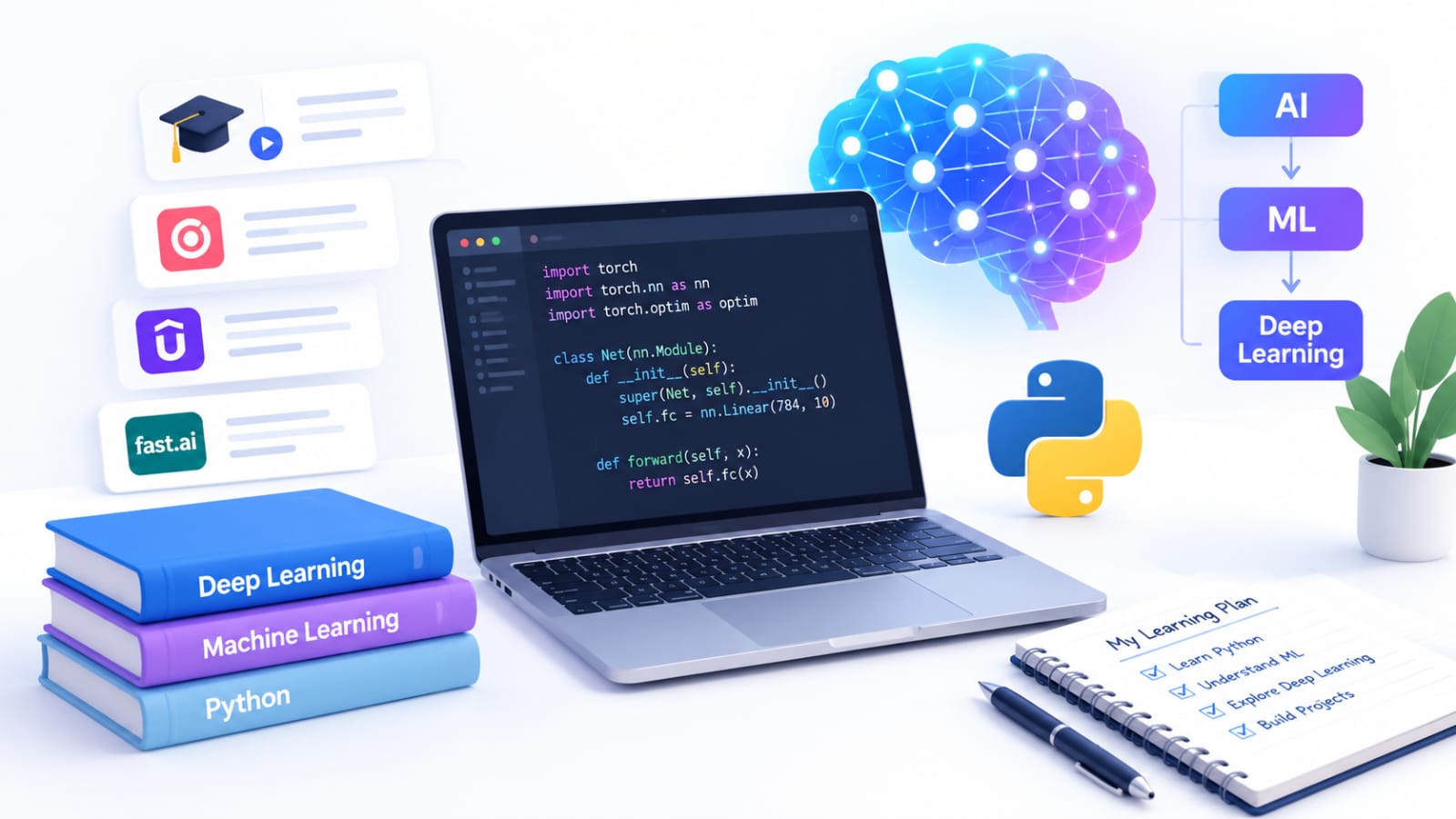
Deep Learning seekhna hai, lekin online itne courses hain ki samajh nahi aata shuruaat kahan se karein. Kuch resources free hain, to kuch courses ke liye payment karni padti hai.
Is article mein hum DeepLearning.AI aur Udemy ke popular deep learning courses compare karenge. Aap jaanoge ki dono platforms ke courses, pricing, certificate aur refund policies mein kya farq hai. Saath hi, free learning resources aur Python se projects tak pahunchne ka ek simple roadmap bhi milega, taaki aap apne budget aur learning goals ke hisaab se sahi shuruaat kar sako.
Is Article Mein Hum Kya Seekhenge? 📚
- Deep Learning kya hai: AI aur ML se iska kya sambandh hai, aur ye kahan use hota hai.
- Shuru karne se pehle: deep learning ke liye Python, maths aur ML ki kitni samajh chahiye.
- DeepLearning.AI: Deep Learning Specialization ka structure, course access, certificate aur pricing.
- Udemy: Deep Learning A-Z aur PyTorch bootcamp jaise courses, ek baar ki payment, sale price aur 30-day refund.
- Comparison: Dono platforms ke courses, pricing, free options, certificates aur refund policies ka comparison.
- Free learning resources: NPTEL, DeepLearning.AI ke short courses, fast.ai aur MIT 6.S191.
- Python roadmap: Python basics se shuru karke Deep Learning projects tak pahunchne ka raasta.
- Sahi course kaise chunein: Apne budget, current knowledge aur learning goals ke hisaab se course select karna.
- Common galtiyan: Sirf videos dekhna, projects na banana aur ek saath kai courses shuru karna.
1. Deep Learning Kya Hai? (Short Mein) 🧠
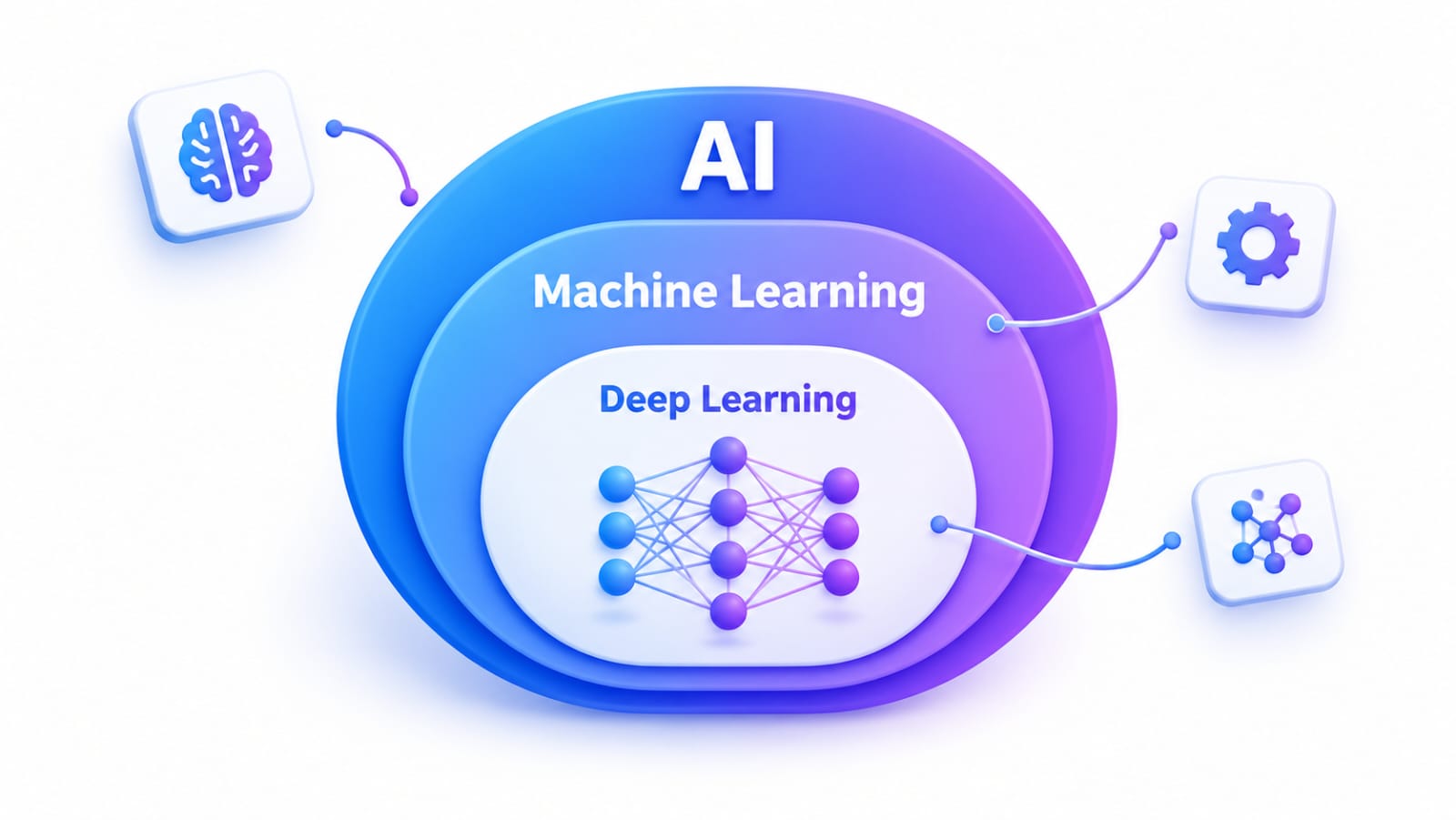
Deep Learning, Machine Learning ka ek hissa hai. Isme computer multiple layers wale neural networks ka use karta hai, jo training data se patterns seekhkar images, text aur audio jaise data ko samajhne mein madad karte hain. Neural network ki layers ki depth ki wajah se ise Deep Learning kaha jaata hai.
AI, ML aur Deep Learning ek-doosre se is tarah jude hain:
- AI (Artificial Intelligence): Ek broad field, jisme machines ko aise tasks karne ke liye develop kiya jaata hai jo aam taur par human intelligence se jude hote hain.
- Machine Learning (ML): AI ka ek hissa, jisme machines data se patterns seekhkar predictions ya decisions karna seekhti hain.
- Deep Learning: ML ka ek hissa, jisme multiple layers wale neural networks ka use hota hai.
Agar aap AI aur Machine Learning ko pehle detail mein samajhna chahte hain, to hamare AI kya hai aur Machine Learning kya hai wale articles padh sakte hain.
Traditional Machine Learning mein kai tasks ke liye humans ko important features select ya prepare karne padte hain. Deep Learning models training ke dauran raw data se useful features bhi seekh sakte hain, khaaskar images, audio aur text jaise data mein.
Deep Learning ka use aaj kai jagahon par hota hai:
- Image aur video recognition: Photos aur videos mein objects ya doosri cheezon ko pehchanna.
- Speech recognition: Boli gayi awaaz ko text mein badalna, jo voice assistants ke kaam karne mein bhi madad karta hai.
- Text generation: ChatGPT jaise tools mein use hone wale Large Language Models (LLMs) deep neural networks par based hote hain.
Deep Learning models ko train karne mein kaafi data aur computing power lag sakti hai. Lekin ise seekhne ke liye aap courses aur chhote projects se shuruaat kar sakte hain. Aage hum dekhenge ki beginners ke liye kaun se courses aur free resources useful hain.
2. Shuru Karne Se Pehle Kya Aana Chahiye? 🧱
Deep Learning seekhne se pehle Python programming, basic maths aur Machine Learning ki basic samajh helpful hoti hai. Is section mein hum dekhenge ki inmein se kya aana chahiye aur shuruaat ke liye powerful computer ki zaroorat hai ya nahi.
1. Python 🐍
DeepLearning.AI ki Deep Learning Specialization ke official page par intermediate Python experience expected hai. Iska matlab hai ki aapko basic programming concepts, jaise for loops, if/else statements aur lists aur dictionaries jaise data structures ki samajh honi chahiye.
Course mein programming assignments bhi hain, isliye sirf Python ki theory padhna kaafi nahi hoga. Aapko code samajhne, usmein changes karne aur khud code likhne ki practice bhi karni chahiye.
2. Maths: Basic Linear Algebra 📐
DeepLearning.AI ke official page par basic linear algebra recommended hai. Ismein vectors, matrices aur unke basic operations, jaise matrix-vector operations aur matrix multiplication, ki samajh shamil hai.
Agar aapko linear algebra nahi aati, to pehle ise seekh sakte hain. DeepLearning.AI ki Mathematics for Machine Learning and Data Science Specialization ek option hai. Ismein linear algebra ke saath calculus, probability aur statistics bhi cover hote hain.
Dhyan rahe, is maths specialization mein bhi basic se intermediate Python programming ki familiarity recommended hai.
3. Machine Learning Ki Basic Samajh 🤖
DeepLearning.AI ki Deep Learning Specialization ke liye Machine Learning concepts ki basic understanding recommended hai. Aapko itna pata hona chahiye ki model data se kaise seekhta hai aur training data ka kya role hota hai.
Agar aapne abhi tak Machine Learning nahi padhi hai, to ghabrane ki zaroorat nahi. Aap pehle ML ke basic concepts samajh sakte hain ya Deep Learning course ke saath zaroorat ke hisaab se unhe revise kar sakte hain.
4. Kya Powerful Computer Chahiye? 💻
Shuruaat ke liye powerful computer hona zaroori nahi hai. Aap Google Colab par browser ke andar Python code likh aur run kar sakte hain. Iske liye apne laptop par alag se development environment set up karna zaroori nahi hota. Colab free mein GPU aur TPU jaise computing resources ka access bhi de sakta hai, lekin inki availability guaranteed nahi hai.
Lekin free resources ki availability guaranteed ya unlimited nahi hai. GPU access aur usage limits badal sakti hain. Shuruaati exercises aur chhote projects ke liye Colab aksar kaafi ho sakta hai, lekin bade models train karte waqt limitations aa sakti hain.
Colab ki current limitations samajhne ke liye Google Colab ka official FAQ dekh sakte hain.
DeepLearning.AI ki Deep Learning Specialization mein programming assignments diye gaye hain. Shuruaat mein apne laptop par GPU set up karne ki zaroorat aam taur par nahi hoti, lekin assignments ke liye course ke current instructions follow karein.
Quick Self-Check ✅
Deep Learning course shuru karne se pehle khud se ye teen sawaal poochhein:
- Kya main Python mein for loops, if/else statements aur lists ya dictionaries ka use karke basic code likh sakta hoon?
- Kya mujhe vectors aur matrices ka basic idea hai?
- Kya mujhe samajh hai ki Machine Learning model data se patterns kaise seekhta hai?
Agar aapko basic Python programming aati hai, to aap Deep Learning seekhna shuru kar sakte hain. Maths ya Machine Learning ki understanding kam hai, to unhe bhi saath-saath improve karein. Har topic mein expert hone ka intezaar karne ki zaroorat nahi hai.
Aage Python roadmap section mein dekhenge ki in skills ko step-by-step kaise seekha ja sakta hai.
3. DeepLearning.AI: Andrew Ng Ka Structured Course 🎓
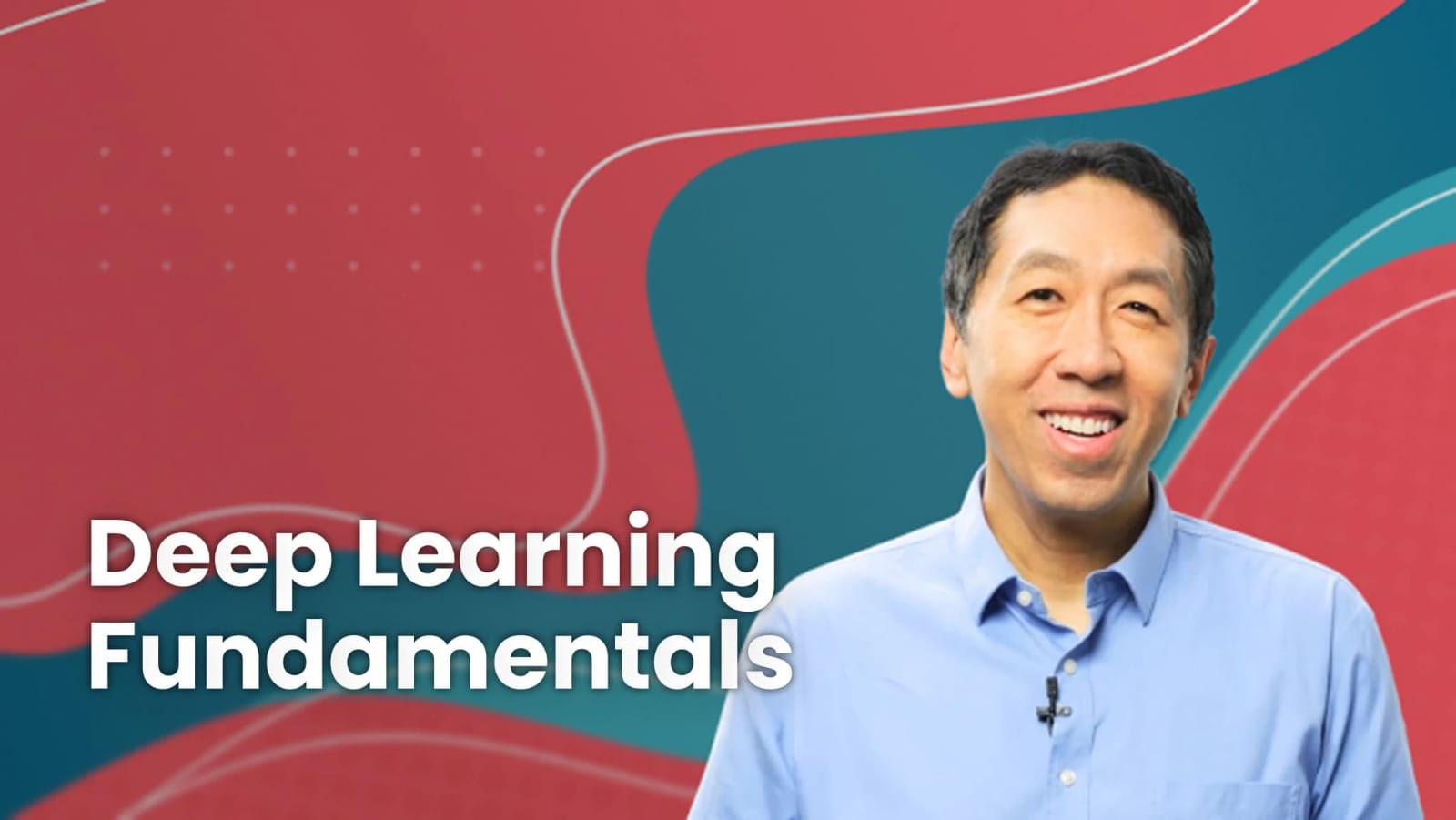
DeepLearning.AI ki Deep Learning Specialization ek popular option hai, jise Andrew Ng aur doosre instructors ne develop kiya hai. Ye Coursera par available 5-course program hai, jisme neural networks, model optimization, computer vision aur sequence models jaise topics cover hote hain.
Coursera ke official page ke mutabik, ye intermediate-level specialization hai aur iski rating 4.8/5 hai, jo 147,000+ reviews par based hai. Platform ise lagbhag 3 months mein complete karne ka estimate deta hai, agar aap har week 10 ghante padhte hain. Actual time aapki learning speed aur practice par depend karega.
Aap details DeepLearning.AI ki official website aur Coursera ke course page par dekh sakte hain.
Isme 5 Courses Hain 📚
| Course | Kya Seekhoge |
|---|---|
| 1. Neural Networks and Deep Learning | Deep neural networks banana, train karna aur unhe applications mein use karna |
| 2. Improving Deep Neural Networks | Hyperparameter tuning, regularization aur optimization techniques |
| 3. Structuring Machine Learning Projects | ML projects ko plan karna, errors analyze karna aur development decisions lena |
| 4. Convolutional Neural Networks | Image recognition, object detection aur computer vision ke concepts |
| 5. Sequence Models | 5. Sequence data, speech recognition, machine translation, Natural Language Processing (NLP) aur Transformers se jude concepts. |
Course mein Python ke saath TensorFlow use karke neural networks implement karne ki practical learning bhi milti hai. Aage badhne par aap CNNs, recurrent neural networks (RNNs), LSTMs aur Transformers jaise architectures ke baare mein bhi seekhenge.
Price Aur Access 💰
DeepLearning.AI ke courses Coursera aur uske apne learning platform par mil sakte hain. Dono platforms ka subscription model alag hai, isliye payment se pehle compare karna useful hai.
- Coursera subscription: Deep Learning Specialization ki current price enrollment page par check karein. Price, available offers aur billing options location aur account ke hisaab se badal sakte hain.
- DeepLearning.AI Pro: Is membership mein eligible DeepLearning.AI courses aur certificates ka access milta hai. Current monthly ya annual price aur membership mein included features official Pro page par check karein.
- Free access: Coursera par kuch courses ke liye preview ya doosre limited free-access options mil sakte hain. Lekin poori Deep Learning Specialization ko free mein complete karna guaranteed nahi hai.
- Financial aid: Coursera par eligible learners financial aid ke liye apply kar sakte hain. Availability aur conditions course page par check karein.
Dhyan rahe: Prices aur offers badal sakte hain. Payment karne se pehle final checkout price, billing cycle aur certificate access zaroor check karein.
Refund Policy 🔄
Refund ka rule is baat par depend karta hai ki aap Coursera se payment kar rahe hain ya DeepLearning.AI Pro membership le rahe hain.
Coursera par:
- Monthly subscription: Kuch monthly subscriptions mein 7-day free trial milta hai, lekin har plan mein ye guaranteed nahi hai. Agar aapke plan mein trial hai, to charge se bachne ke liye trial khatam hone se pehle cancel karein.
- Subscription refund: Coursera subscriptions ke refunds par restrictions hain. Lekin eligible Specialization subscriptions ke liye applicable refund window ho sakti hai. Refund eligibility, deadline aur conditions apne plan ki current policy mein check karein.
- Annual Coursera Plus: Eligible annual subscriptions par original payment ke 14 din ke andar refund mil sakta hai. Coursera Plus mein is Specialization ka access included hai ya nahi, payment se pehle course page par check karein. Agar included nahi hai, to ise alag se subscribe karna pad sakta hai.
- One-time purchase: Eligible courses aur Specializations par aam taur par payment ke 7 din ke andar ya certificate earn karne se pehle refund mil sakta hai, jo bhi pehle ho.
DeepLearning.AI Pro par:
- Membership mein 7-day free trial diya jaata hai. Trial ke dauran cancel karne par charge se bach sakte hain.
- Trial ke baad ki payments aam taur par non-refundable hoti hain.
Refund ke liye payment karne se pehle Coursera ki official Refund and Cancellation Policy aur DeepLearning.AI Pro refund policy padh lein.
Ye Kiske Liye Sahi Hai? 🎯
DeepLearning.AI ki Deep Learning Specialization aapke liye achha option ho sakti hai agar:
- Aap structured, step-by-step learning chahte hain, jisme topics ek logical order mein cover hote hain.
- Aapko Python ki intermediate-level understanding hai aur basic linear algebra aur Machine Learning concepts se familiarity hai.
- Aap theory ke saath programming assignments aur practical concepts seekhna chahte hain.
- Aap ek completion certificate chahte hain, jise apne resume ya LinkedIn profile par add kar sakein.
Agar aapko sirf koi ek specific tool seekhna hai ya jaldi se chhota project banana hai, to poori specialization aapke liye zaroorat se zyada lambi ho sakti hai. Aise mein kisi focused course ya free tutorial se shuruaat karna behtar rahega.
4. Udemy: Kam Budget Aur Project-Based Learning 🛒
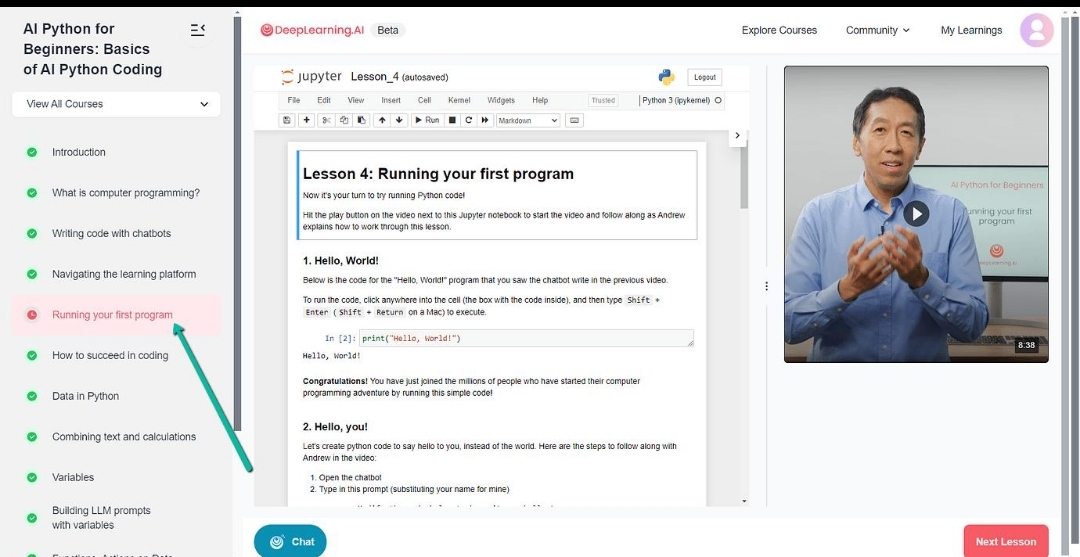
Udemy ek online learning marketplace hai, jahan alag-alag instructors apne courses publish karte hain. Isliye yahan Deep Learning seekhne ke liye kai options milte hain. Aap course ka content, instructor ka teaching style, practical projects aur recent reviews compare karke apne liye sahi course chun sakte hain.
Deep Learning ke liye ye do options dekh sakte hain:
| Course | Focus | Dhyan Rakhne Wali Baat |
|---|---|---|
| Deep Learning A-Z | Python mein neural networks, computer vision aur doosre deep learning models banana | Course mein Python ke saath neural networks, computer vision, recurrent neural networks aur recommender systems jaise topics par practical exercises bhi shamil hain. Kuch projects mein PyTorch aur AWS ka use bhi hota hai. |
| PyTorch for Deep Learning Bootcamp | PyTorch ke saath hands-on coding, computer vision aur model development | Course mein practical exercises aur projects par focus hai |
Dono courses ki ratings aur review counts badalte rehte hain. Enrollment se pehle Udemy ki official listings par current ratings, review counts aur course updates check kar lein.
Dhyan rahe: Course khareedne se pehle total video hours, last updated date, syllabus, preview lectures aur Python ki required knowledge zaroor check karein.
Price Aur Access 💰
Udemy par individual courses aur subscription-based plans, dono options milte hain. Agar aap sirf ek Deep Learning course karna chahte hain, to individual purchase compare karna useful rahega.
- Ek baar ki payment: Eligible individual course purchase karne par aam taur par lifetime access milta hai, jab tak aapka account aur course Udemy par available hain. Iske liye monthly subscription lena zaroori nahi hota.
- Sale price: Udemy par discounts aur offers ke kaaran course ki price badal sakti hai. Isliye kisi fixed price, jaise ₹499, ko guaranteed price na samjhein. Payment se pehle apne account par dikhne wali final price check karein.
- Subscription plan: Udemy ka Personal Plan bhi available hai, jisme eligible courses ka collection milta hai. Lekin har individual course subscription mein included ho, ye zaroori nahi hai.
Refund Policy 🔄
Udemy ki official policy ke mutabik, eligible course purchases par 30 din ke andar refund request ki ja sakti hai. Lekin refund automatic ya har situation mein guaranteed nahi hota.
- 30-day refund window: Purchase ke baad eligible course ke liye 30 din ke andar refund request karein.
- Kuch restrictions: Refund policy ke tahat kuch restrictions apply hoti hain. Course ka bahut zyada content consume karna, course download karna ya baar-baar refund requests karna eligibility ko affect kar sakta hai. Isliye refund guaranteed nahi hota.
- Payment method: Refund original payment method ya, kuch cases mein, Udemy Credits ke roop mein mil sakta hai. Ye purchase aur payment method par depend karta hai.
- Subscription: Individual course purchases aur Personal Plan subscriptions ke rules alag hain. Subscription cancel karne se future renewal ruk sakta hai, lekin pehle se ki gayi payment ka refund automatic nahi hota. Apne plan ki current cancellation aur refund policy check karein.
Refund ke liye request karne se pehle Udemy ki official refund policy padh lein.
Certificate 📜
Eligible paid Udemy course ko complete karne par aapko certificate of completion mil sakta hai. Certificate ki eligibility course ke type par depend karti hai. Ise resume ya LinkedIn profile par apni learning dikhane ke liye add kar sakte hain.
Lekin ye certificate formal degree ya accredited qualification ka replacement nahi hai. Deep Learning mein apni skills demonstrate karne ke liye course ke saath practical projects banana bhi important hai.
Ye Kiske Liye Sahi Hai? 🎯
Udemy aapke liye achha option ho sakta hai agar:
- Aapka budget limited hai aur aap individual course ki one-time payment prefer karte hain.
- Aapko hands-on projects aur coding practice ke through seekhna pasand hai.
- Aap kisi specific framework, jaise PyTorch, par focus karna chahte hain.
- Aap apni pasand ka instructor aur teaching style chunna chahte hain.
Dhyan rahe, har instructor ka teaching style, course structure aur content quality alag ho sakti hai. Isliye sirf high rating dekhkar course na khareedein. Preview lectures dekhein, syllabus compare karein aur recent reviews padhkar decide karein.
5. DeepLearning.AI vs Udemy: Ek Table Mein Comparison 📊
Ab tak humne DeepLearning.AI aur Udemy ke courses, pricing aur learning style ko alag-alag dekha. Ab dono ko ek saath compare karte hain, taaki aap apne budget aur learning goals ke hisaab se sahi option chun sakein.
| Point | DeepLearning.AI (Coursera par) | Udemy |
|---|---|---|
| Format | 5 courses ki structured specialization, jisme lagbhag 127 ghante ka content hai | Alag-alag instructors ke individual courses |
| Level | Intermediate level; Python aur basic linear algebra ki understanding helpful hai | Course ke hisaab se beginner se advanced tak |
| Price | Coursera subscription ki price enrollment page par check karein. DeepLearning.AI Pro ek alag membership hai | Individual course ki one-time price, jo offers aur sales ke saath badal sakti hai |
| Access | Subscription-based enrollment mein access plan ki conditions par depend karta hai | Individual course purchase par aam taur par lifetime access |
| Free option | Kuch free learning options ya previews mil sakte hain. Financial aid aur full course access ki availability current enrollment page par check karein. | Free preview lectures mil sakte hain; poora course aam taur par paid hota hai |
| Certificate | Eligible paid enrollment aur completion requirements poori karne par certificate | Eligible paid course complete karne par certificate of completion |
| Refund | Plan aur purchase type ke hisaab se rules alag hain | Eligible individual course purchases par aam taur par 30 din ke andar refund request ki ja sakti hai, conditions ke saath |
| Assignments | Structured programming assignments aur graded work | Assignments aur projects instructor aur course ke hisaab se alag hote hain |
Dhyan rahe: Pricing, free-access options aur refund policies badal sakti hain. Payment se pehle DeepLearning.AI, Coursera aur Udemy ke current official pages par details verify karein.
Table Se Ek Zaroori Baat 💡
Dono platforms ki price ko seedhe compare karna aasaan nahi hai, kyunki unka payment model alag hai.
- Coursera par subscription: Agar aap monthly subscription lete hain, to total cost is baat par depend karegi ki aapko course complete karne mein kitna samay lagta hai. Example ke liye, agar kisi subscription plan ki monthly price $49 ho aur aap use 3 mahine tak continue karein, to total cost $147 hogi. Ye sirf calculation samjhane ke liye hai; actual price aur billing conditions official enrollment page par check karein. Ye sirf example hai, current price ya guaranteed completion time nahi.
- DeepLearning.AI Pro: Ye ek alag membership hai. Iski pricing aur included courses ko Coursera subscription se alag compare karein.
- Udemy par individual purchase: Aap eligible individual course ke liye ek baar payment karte hain aur aam taur par use apni speed se complete kar sakte hain. Sale ke dauran price kam ho sakti hai, lekin offer har samay available nahi hota.
Ye Table Kya Nahi Batata? ⚠️
Sirf price, rating ya certificate dekhkar course choose karna sahi nahi hoga. Kuch aur baatein bhi dhyan mein rakhein:
- Course ki quality: Udemy par teaching style aur content quality instructor ke hisaab se badalti hai. Isliye syllabus, preview lectures aur recent reviews dekhein.
- Aapki learning style: Agar aapko topics ek planned order mein seekhna pasand hai, to structured specialization suit kar sakti hai. Agar aap kisi specific topic par focus karna chahte hain, to Udemy ka individual course useful ho sakta hai.
- Practical learning: Course mein coding assignments aur projects kitne hain, ye check karein. Sirf videos dekhne ke bajay coding assignments aur projects par khud practice karna bhi zaroori hai.
- Certificate ka role: Certificate learning complete karne ka proof ho sakta hai, lekin job ke liye practical skills, projects aur concepts ki understanding bhi important hain.
Isliye final decision sirf price ke basis par na lein. Aage hum free learning options aur aapke goal ke hisaab se sahi platform chunne ke tareeke dekhenge.
6. Free Options: Bina Paise Ke Deep Learning Kaise Seekhein 🆓
Deep Learning seekhne ke liye paid course khareedna zaroori nahi hai. Kai platforms par free lectures, tutorials aur practical exercises milte hain. Har option ka focus aur difficulty level alag hai, isliye apne skill level aur learning goal ke hisaab se choose karein.
| Option | Kya Hai | Kiske Liye |
|---|---|---|
| NPTEL | IIT aur IISc ke instructors ke academic courses | Structured learning aur optional certificate exam chahne wale learners |
| DeepLearning.AI Short Courses | Specific AI aur technical topics par short courses | Kisi particular topic ko jaldi explore karna chahne wale learners |
| fast.ai | Code-first practical Deep Learning course | Python ya doosri programming language ka experience rakhne wale learners |
| MIT 6.S191 | MIT ka introductory Deep Learning program | Lectures, theory aur coding labs ke through seekhne wale learners |
1. NPTEL: IIT Ke Professors Se 🇮🇳
NPTEL par IIT aur IISc ke instructors ke courses milte hain. Deep Learning seekhne ke liye aap IIT Ropar ke Deep Learning course ki details check kar sakte hain.
- Free enrollment: NPTEL par course ke learning materials aur lectures aam taur par free milte hain.
- Certificate: Certificate ke liye eligible course ka optional proctored exam dena hota hai, jiski fee alag hoti hai. Exam fee aur eligibility current course page par verify karein.
- Course schedule: Har course ka enrollment period aur duration alag ho sakta hai. Isliye current session ki dates check karke hi enroll karein.
Agar aapko academic style mein step-by-step padhna pasand hai, to NPTEL ek achha option ho sakta hai.
2. DeepLearning.AI Short Courses ⚡
DeepLearning.AI ke Short Courses catalogue mein AI aur Machine Learning se jude kai short courses milte hain. Inmein Generative AI, prompt engineering, LLMs, agents aur doosre technical topics shamil hain.
-
Free learning: DeepLearning.AI ke Short Courses free hain aur specific AI topics par practical learning ke liye design kiye gaye hain. Course complete karne par regular official certificate nahi milta; completion recognition (Accomplishment) Pro subscribers ke liye available hai.
-
Short duration: Kuch courses ek-do ghante ke hote hain, jabki kuch ko complete karne mein zyada samay lag sakta hai.
-
Specific skills: Agar aap kisi particular topic, jaise RAG, LLM applications ya AI agents, ko explore karna chahte hain, to ye courses useful hain.
Dhyan rahe, har short course Deep Learning ki fundamentals cover nahi karta. Agar aap neural networks, backpropagation aur model training ki basic understanding banana chahte hain, to course ka syllabus pehle check karein.
3. fast.ai: Code Se Shuru 💻
fast.ai ka Practical Deep Learning for Coders ek free course hai jo practical coding aur real-world applications par focus karta hai. Iska approach code-first hai: aap pehle working model banate hain, phir dheere-dheere uske peeche ke concepts samajhte hain.
- Prerequisite: Official page coding experience ko prerequisite batata hai, sirf helpful cheez nahi. Aapka overall meaning sahi hai, lekin revised wording prerequisite ko zyada clearly express karti hai.
- Maths: High-school-level maths ka background kaafi hai; zaroorat ke hisaab se kuch concepts course mein samjhaye jaate hain.
- Tools: Course mein PyTorch aur fastai ka use hota hai.
- Practice: Lessons ke saath notebooks aur coding exercises par kaam karna important hai.
Agar aapko coding aati hai aur projects bana kar seekhna pasand hai, to fast.ai ek strong option hai. Bilkul naye programmers ke liye pehle Python ki basics aur coding practice karna behtar rahega.
4. MIT 6.S191: Introduction to Deep Learning 🎓
MIT ka Introduction to Deep Learning (6.S191) ek introductory program hai, jiske lectures aur lab materials online available hain.
Ismein neural networks aur Deep Learning ke important topics cover hote hain, jaise:
- Neural networks: Models kaise learn karte hain.
- Computer vision: Images ko process karne wale models.
- Sequence models aur Transformers: Text aur doosre sequential data ko process karne ke concepts.
- Generative AI: Deep Learning ke modern applications.
MIT ke 2026 lab materials official GitHub repository par available hain. Labs Google Colab mein run kiye ja sakte hain, isliye local software setup ki zaroorat nahi hoti. Inhe run karne ke liye Google account chahiye.
Ye course fast pace par chal sakta hai. Python aur basic maths ki familiarity hone se concepts samajhna aasan hoga. Agar aap bilkul beginner hain, to pehle programming basics par kaam karein.
Free Options Ki Limitations ⚠️
Free resources se achhi learning ho sakti hai, lekin kuch baatein dhyan mein rakhni chahiye:
- Certificate: Har free course official certificate nahi deta. NPTEL par certificate ke liye eligible course ka exam dena aur fee pay karna pad sakta hai. DeepLearning.AI Short Courses mein official certificate ke bajay Pro subscribers ko completion recognition milta hai. Baaki platforms ke liye current course details check karein.
- Guidance: Har free course mein personal mentor ya individual doubt-solving support guaranteed nahi hota. Forums aur community discussions se help mil sakti hai.
- Learning structure: Kuch courses structured hote hain, jabki kuch mein aapko apna learning order aur practice schedule khud decide karna padta hai.
- Practical experience: Sirf lectures dekhne ke bajay coding exercises aur chhote projects bhi karein.
Agar aapka budget limited hai, to pehle ek free resource choose karke use consistently follow karein. Ek saath chaar courses shuru karne ke bajay ek course complete karna aur uske concepts par project banana zyada useful rahega.
7. Python Roadmap: Zero Se Deep Learning Projects Tak 🗺️
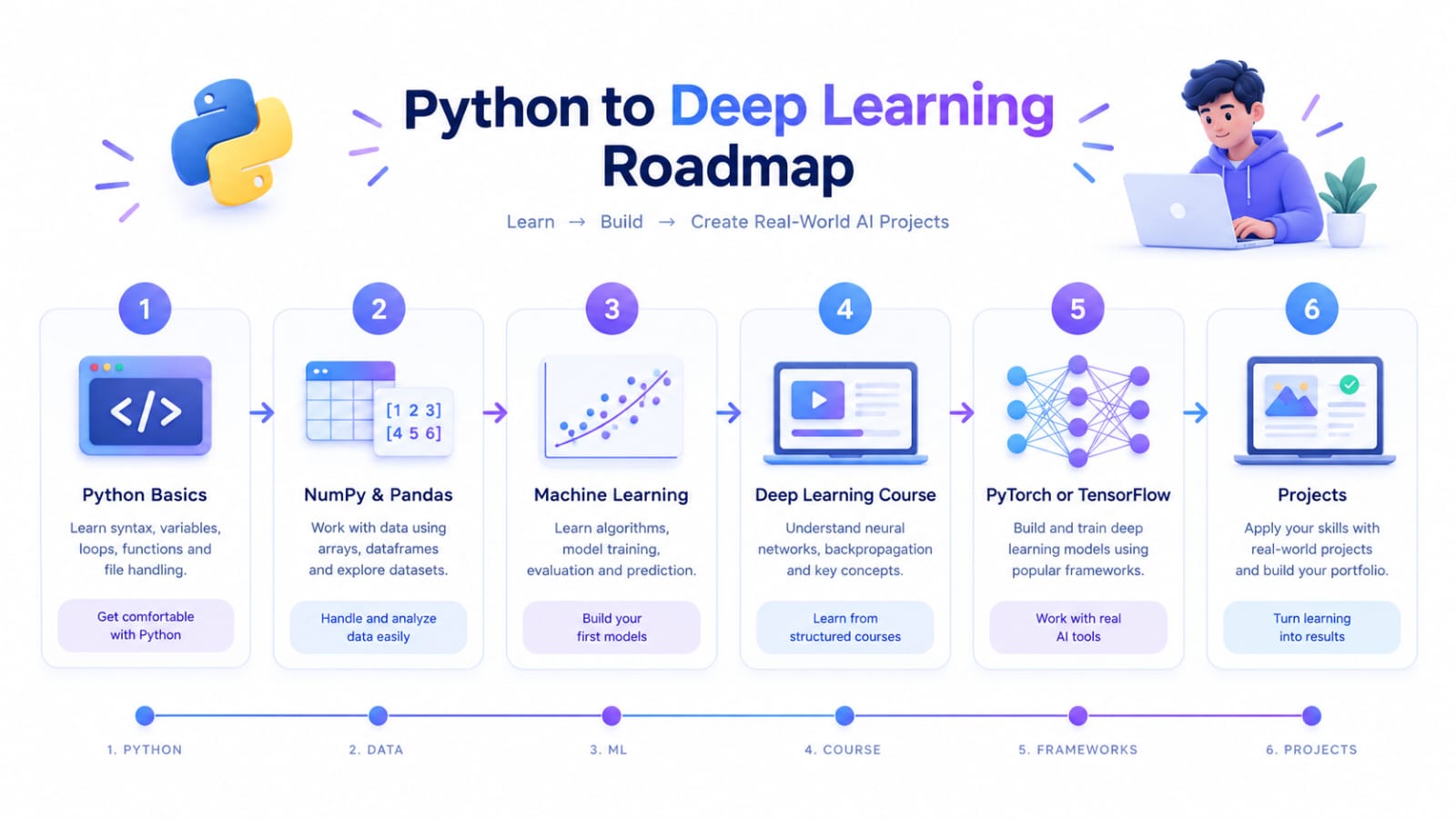
Deep Learning ek din mein nahi seekha jaata, lekin agar aap sahi order mein concepts seekhein aur saath-saath practice karein, to journey kaafi manageable ho sakti hai. Ye 6 steps follow karein aur har step ke baad check karein ki aapne agle step ke liye zaroori concepts aur practical skills seekh li hain ya nahi.
Learning Roadmap: Python → NumPy aur Pandas → ML Basics → Deep Learning Course → Framework → Projects
Step 1: Python Basics 🐍
Sabse pehle Python programming ki foundation banayein. Variables, data types, conditions, loops, functions, lists aur dictionaries jaise concepts seekhein. Deep Learning models ke saath kaam karne ke liye code ko samajhna aur khud likh paana important hai.
Kahan seekhein: Kaggle Learn par Python ka free micro-course available hai. Aap browser mein exercises complete karke practice kar sakte hain.
✅ **Aage badhein jab:**aap loops, functions, lists aur dictionaries ka use karke chhota program khud likh sakein aur basic errors ko debug kar sakein.
Step 2: NumPy Aur Pandas 📊
Python ke baad data ke saath kaam karna seekhein.
- NumPy: Numerical arrays, matrices aur mathematical operations ke liye useful hai. Deep Learning mein data ko represent karne aur numerical operations samajhne ke liye arrays ki basic understanding important hai. Deep Learning frameworks mein tensors ka use bhi hota hai.
- Pandas: Table-form data, jaise CSV files, ko load, filter, clean aur summarize karne ke liye use hota hai.
Kahan seekhein: Kaggle Learn par Pandas ka free course available hai. NumPy ke liye uski official documentation se shuruaat kar sakte hain.
✅ Aage badhein jab: aap NumPy arrays par basic operations kar sakein aur Pandas ki help se CSV file load karke data filter aur summarize kar sakein.
Step 3: Machine Learning Basics 🤖
Deep Learning shuru karne se pehle Machine Learning ke kuch basic concepts samajh lein:
- Training data: Jis data se model patterns seekhta hai.
- Testing data: Aisa alag data jiska use training ke dauran nahi hota aur jisse model ki final performance evaluate ki jaati hai.
- Model evaluation: Accuracy jaise metrics se model ke results ko samajhna.
- Overfitting: Jab model training data par achha perform kare, lekin naye data par kamzor ho.
- Validation data: Model ya uski settings choose karte waqt performance check karne ke liye use hone wala data.
Kahan seekhein: Kaggle Learn ka Intro to Machine Learning course free mein available hai. Ismein basic ML concepts aur model evaluation ki practice kar sakte hain.
Linear algebra ke liye vectors aur matrices par bhi kaam karein. Agar maths mein foundation kamzor hai, to pichhle section mein batayi gayi free learning resources se shuruaat kar sakte hain.
✅ Aage badhein jab: aap ek basic ML model train kar sakein, training aur testing data ka difference samjha sakein aur suitable metric se model ki performance evaluate kar sakein.
Step 4: Ek Deep Learning Course Chunein 🎓
Ab apne skill level, budget aur learning style ke hisaab se ek course choose karein. Is article mein humne ye options cover kiye hain:
- DeepLearning.AI: Structured specialization aur step-by-step learning ke liye.
- Udemy: Individual courses aur project-based learning ke liye.
- NPTEL: Academic style mein padhne ke liye.
- fast.ai: Coding aur practical projects par focus karne ke liye.
- MIT 6.S191: Deep Learning ke important concepts aur lab exercises explore karne ke liye.
Shuruaat mein ek hi course follow karein. Ek saath kai courses shuru karne se topics repeat ho sakte hain aur learning path confusing ban sakta hai.
✅ Aage badhein jab: aap course ke basic assignments khud solve karne lagein aur samajh sakein ki model ko train karne ke liye code mein kya ho raha hai.
Step 5: Framework Chunein — PyTorch Ya TensorFlow ⚙️
Deep Learning models banane aur train karne ke liye frameworks ka use hota hai. Do popular options PyTorch aur TensorFlow hain. Beginners ke liye dono ek saath seekhna zaroori nahi hai.
- PyTorch: Neural networks banane, train karne aur experiments karne ke liye ek widely used framework hai. Iski official tutorials se shuruaat kar sakte hain.
- TensorFlow: Deep Learning models develop aur deploy karne ke liye tools aur libraries provide karta hai. Beginners TensorFlow tutorials se seekhna shuru kar sakte hain.
Sabse practical rule: Jis course ko aap follow kar rahe hain, pehle usi ka framework seekhein. DeepLearning.AI ki Deep Learning Specialization mein TensorFlow ka use hota hai, jabki fast.ai ka practical course PyTorch aur fastai par focus karta hai.
✅ Aage badhein jab: aap chosen framework mein ek simple neural network bana aur train kar sakein, phir alag test data par uski performance evaluate kar sakein.
Step 6: Chhote Projects Banayein 🛠️
Concepts seekhne ke baad unhe projects mein apply karein. Shuruaat mein aise projects chunein jinka scope chhota ho aur jinke liye dataset aasani se mil sake.
Kuch beginner-friendly ideas:
- Handwritten Digit Recognition: Handwritten digits ko pehchanne wala model banayein.
- Image Classification: Images ko alag-alag categories mein classify karne wala model train karein.
- Sentiment Analysis: Text ko positive ya negative jaise sentiment labels mein classify karein.
Aap projects ko Google Colab par experiment kar sakte hain aur code GitHub par upload kar sakte hain.
Har project ke saath ek README file bhi banayein, jisme ye details hon:
- Project ka purpose aur problem statement.
- Dataset ka source.
- Model aur approach ka short explanation.
- Evaluation results aur project ki limitations.
Isse aapka portfolio zyada useful banega, kyunki doosre log sirf code nahi, balki aapka approach aur results bhi samajh sakenge.
Deep Learning models train karte waqt memory aur computing resources ki zaroorat model aur dataset ke size par depend karti hai. Is topic ko detail mein samajhne ke liye hamari AI models ke liye RAM kitni zaroori hai wali article bhi padh sakte hain.
Roadmap Follow Karne Ka Simple Rule ✅
Sirf videos dekhne ke bajay concepts ko code mein apply karein, exercises solve karein aur chhote projects banayein. Kisi topic mein difficulty aaye, to uski basics revise karke phir aage badhein.
Yaad rakhein: Deep Learning seekhne ke liye shuruaat mein har maths concept ya framework mein expert hona zaroori nahi hai. Consistent practice aur step-by-step learning se apni understanding improve kar sakte hain.
8. Sahi Course Kaise Chunein? 🤔
Ab sahi course choose karne ke liye khud se ye 3 sawal poochho:
- Mera budget kitna hai? Zero, limited ya flexible?
- Mujhe certificate chahiye ya sirf skill seekhni hai?
- Mujhe kaise seekhna pasand hai? Theory samajhkar ya seedha coding aur projects se?
Situation Ke Hisaab Se Choice 🎯
| Aapki Situation | Kya Chunein | Kyun |
|---|---|---|
| Zero budget aur Python aati hai | fast.ai ya MIT 6.S191 | Dono resources ko free mein explore kar sakte hain. Inka course format aur teaching style alag hai, isliye pehle syllabus dekhein. |
| India mein certificate chahiye | NPTEL ka Deep Learning course | Course enrollment, exam fee aur certificate ki eligibility alag ho sakti hai. Current details official course page par check karein. |
| Structured learning aur certificate chahiye | DeepLearning.AI Deep Learning Specialization | Ismein 5 courses ki series hai. Subscription price aur financial aid ki eligibility Coursera par check karein. |
| One-time purchase aur practical projects chahiye | Udemy ka PyTorch bootcamp | Course ke projects, purchase terms aur access conditions dekhein. Eligible purchases par refund ki conditions bhi check karein. |
| Sirf GenAI ya LLM apps seekhne hain | DeepLearning.AI ke short courses | Specific topics par focused learning ke liye useful ho sakte hain. Course ka syllabus, duration aur prerequisites pehle dekhein. |
| Python ya basic maths abhi nahi aati | Pehle Python aur maths ki foundation banayein | Basic programming aur maths samajhne se deep learning ke concepts aur code follow karna aasaan hoga. |
Paisa Kharch Karne Se Pehle 💡
- Pehle free mein try karo. Ek free lecture ya short course dekho. Isse teaching style aur course ka level samajhne mein madad milegi.
- Refund aur cancellation rules check karo. Subscription ya paid course lene se pehle free trial, cancellation aur refund ki conditions padh lo. Har purchase par refund milna zaroori nahi hai.
- Current price verify karo. Course ki fees, certificate eligibility aur access conditions badal sakti hain. Payment se pehle official page par details check kar lo.
Ek Simple Rule 📌
Agar samajh nahi aa raha ki kahan se shuru karein, to ye order follow karo:
- Pehle free resources try karo. fast.ai ya MIT 6.S191 ka syllabus dekho aur ek-do lectures se shuruaat karo.
- Structured learning chahiye to DeepLearning.AI dekho. Course ka syllabus, prerequisites aur certificate ki conditions samjho.
- Projects ke through seekhna hai to Udemy explore karo. Course preview, curriculum aur recent reviews dekhkar decision lo.
Sabse behtar course woh hai jise aap samajhkar aur practice karte hue poora kar sako, na ki woh jo sirf sabse popular ho.
9. Deep Learning Seekhte Waqt 3 Common Galtiyan ⚠️
Deep learning seekhte waqt beginners aksar kuch aisi galtiyan karte hain, jinse unka time waste hota hai aur progress slow ho sakti hai. In galtiyon ko pehle se samajh loge, to apni learning ko behtar bana sakte ho.
Galti 1: Sirf Videos Dekhna 📺
Video dekhte waqt lagta hai ki sab kuch samajh aa gaya, lekin jab khud code likhne baithte ho, to samajh nahi aata ki shuruaat kahan se karein. Isliye sirf videos dekhne ke bajaye khud code likhna aur practice karna bhi zaroori hai.
Is baat ko samajhne ke liye ek useful research dekhein. 225 studies ke ek meta-analysis mein active learning aur traditional lectures ki tulna ki gayi thi. Active learning wale groups ke average exam scores lagbhag 6% behtar the. In groups mein failure rate 21.8% tha, jabki traditional lectures wale groups mein 33.8%.
Yeh research college-level STEM classes par thi, online deep learning courses par specifically nahi. Phir bhi, isse yeh samajhne mein madad milti hai ki problems solve karna aur actively practice karna learning ka important hissa hai.
Kya karein:
- Video ke saath code khud likho aur run karo.
- Course ke programming assignments skip mat karo. DeepLearning.AI ki specialization mein programming assignments shamil hain.
- Ek lecture ke baad code mein chhota sa change karke dekho ki output kaise badalta hai.
Galti 2: Course Ke Baad Koi Project Na Banana 🛠️
Course complete ho gaya, certificate bhi mil gaya, lekin aapne kuch banakar nahi dekha. Aise mein apni practical understanding dikhana mushkil ho sakta hai.
Project banane se aapko concepts apply karne, code debug karne aur apni galtiyon se seekhne ka mauka milta hai.
Kya karein:
- Course khatam karne ke baad ek chhota project shuru karo, jaise handwritten digit recognition ya image classifier. Python roadmap ke Step 6 mein diye gaye project ideas bhi dekh sakte ho.
- Code ko GitHub par upload karo. README mein project ka purpose, use karne ka tareeka aur results likho.
- Pehle project ko perfect banane ka intezaar mat karo. Chhota aur poora project, bade aur adhure project se behtar hai.
Galti 3: Ek Saath Kai Courses Shuru Karna 📚
Aaj DeepLearning.AI, kal Udemy aur parso YouTube. Har jagah se seekhne ki koshish mein aapka focus alag-alag directions mein bant sakta hai. Isse kisi ek topic ko achhe se samajhna aur course complete karna mushkil ho sakta hai.
Paid courses lene par kharch bhi badh sakta hai. Subscription lene se pehle current price, billing cycle aur refund conditions check karein. Cancellation se future billing ruk sakti hai, lekin pehle ki payment ka refund applicable terms par depend karta hai.
Kya karein:
- Ek course ko apna primary learning resource chuno aur uske according regular practice karo.
- Dusra course tabhi add karo jab kisi specific topic ko samajhne ke liye extra help chahiye ya pehle course ki foundation clear ho.
- Agar course aapke level ke hisaab se sahi nahi hai, to switch karne se pehle reason samjho. Bina clear reason ke har hafte course mat badlo.
Quick Self-Check ✅
Aage badhne se pehle khud se ye 3 sawal poochho:
- Kya main har lecture ke saath code likh raha hoon?
- Kya maine ek chhota project shuru kiya hai ya uska clear plan banaya hai?
- Kya mera main focus abhi ek hi course par hai?
Agar inmein se zyada tar sawalon ka jawab "haan" hai, to aap achhi direction mein aage badh rahe ho. Bas regular practice karte raho aur seekhe hue concepts ko chhote projects mein apply karte raho.
Frequently Asked Questions (FAQs) ❓
1. Deep Learning Seekhne Ke Liye Kya Aana Chahiye?
DeepLearning.AI ki Deep Learning Specialization ke liye intermediate Python aur basic linear algebra ki understanding helpful hai. Machine Learning ki basic knowledge bhi concepts samajhne mein madad kar sakti hai. Enroll karne se pehle official course page par prerequisites check kar lein.
2. Kya DeepLearning.AI Ka Course Free Hai?
DeepLearning.AI ki poori Deep Learning Specialization ko free maan kar nahi chalna chahiye. Coursera par course access, subscription pricing aur certificate ke liye payment ki conditions check karein. Financial aid ya audit option available hai ya nahi, yeh bhi official page par dekhein.
DeepLearning.AI ke short courses mein kai free options hain, jinmein Generative AI aur LLMs jaise topics shamil hain. Har course ka syllabus aur access policy alag ho sakti hai.
3. Udemy Aur DeepLearning.AI Mein Kaun Sa Better Hai?
Yeh aapke budget aur learning goals par depend karta hai.
- DeepLearning.AI: Structured learning path aur course assignments chahiye, to iski Deep Learning Specialization explore kar sakte hain.
- Udemy: Practical projects ke through seekhna chahte hain, to PyTorch bootcamp jaise courses compare kar sakte hain.
Dono mein se koi bhi course choose karne se pehle syllabus, prerequisites, teaching style aur current pricing check karein. Certificate aur course access ki conditions bhi alag ho sakti hain.
4. Kya Deep Learning Ke Liye Powerful Computer Chahiye?
Shuruaat mein zaroori nahi. Google Colab browser mein Python code run karne deta hai aur free tier par GPU access bhi mil sakta hai. Lekin GPU availability, usage limits aur session duration guaranteed nahi hain.
Aap basic coding aur chhote experiments se shuruaat kar sakte hain. Bade models train karne ke liye baad mein zyada computing resources ki zaroorat pad sakti hai.
5. Udemy Ka Refund Milta Hai Kya?
Udemy par eligible course purchases ke liye aam taur par 30-day refund policy hoti hai, lekin kuch conditions aur exceptions lagu ho sakte hain. Payment karne se pehle course ki eligibility aur Udemy ke official refund rules check kar lein.
6. Bina Paise Ke Deep Learning Kaise Seekhein?
Aap in free learning resources se shuruaat kar sakte hain:
- fast.ai: Practical deep learning seekhne ke liye.
- MIT 6.S191: Deep learning ke concepts aur applications samajhne ke liye.
- DeepLearning.AI short courses: Generative AI aur LLMs jaise specific topics explore karne ke liye.
- NPTEL: Deep learning se related courses aur structured learning ke liye.
Dhyan rahe ki free course access ka matlab hamesha free certificate nahi hota. NPTEL ke course enrollment, exam fee aur certificate eligibility ki current details official course page par check karein.
7. PyTorch Pehle Seekhein Ya TensorFlow?
Agar aap kisi specific course se deep learning seekh rahe hain, to pehle wahi framework seekhein jo us course mein use hota hai.
- PyTorch: fast.ai aur PyTorch-focused Udemy courses ke saath seekh sakte hain.
- TensorFlow: DeepLearning.AI ki Deep Learning Specialization ke saath seekh sakte hain.
Shuruaat mein dono frameworks ek saath seekhne ki zaroorat nahi hai. Pehle ek framework ke basics samjhein, code likhein aur chhote projects banayein. Baad mein doosra framework explore kar sakte hain.
Conclusion 📝
Deep learning seekhne ke liye ek hi best course nahi hota. Sahi choice aapke budget, current knowledge aur learning goals par depend karti hai.
- DeepLearning.AI: Structured learning path ke liye.
- Udemy: Project-based learning ke liye, agar aapko suitable course milta hai.
- Free resources: Bina paise kharch kiye shuruaat karne ke liye.
Course choose karne se pehle Python aur basic linear algebra ki apni understanding check karein. Ek course ko primary resource banayein, har lecture ke saath code likhein aur seekhe hue concepts ko chhote projects mein apply karein.
Aaj ka simple next step: Agar Python abhi nahi aati, to Kaggle ka Python course try karein. Agar Python ki basics aati hain, to kisi free deep learning lecture se shuruaat karein aur khud code run karke dekhein.
Career aur practical skills ke baare mein aur jaanne ke liye Students ke liye Top 10 Skills: Career Mein Successful Hone Ke Liye Kya Sikhein wala article bhi padh sakte hain.
SHARE THIS ARTICLE